Contact
Office Locations
Home Office:
The Dunnican Team
9106 Royal Burgess Dr
Rowlett TX 75089
Rockwall Office:
Coldwell Banker Apex, Realtors®
2555 Ridge Road #144
Rockwall TX 75087
Owning a home in the Dallas–Fort Worth area means keeping up with weather swings, heavy storms, high humidity, and the natural wear that comes with our climate. A simple seasonal routine helps prevent small issues from becoming big repairs, protects your home’s value, and keeps major systems working efficiently.
This guide walks DFW homeowners through the most important tasks to tackle each season, from storm prep and gutter cleaning to HVAC care and outdoor maintenance.
• Replace or clean your HVAC filter.
• Check thermostat batteries.
• Test smoke and carbon monoxide detectors.
• Look for moisture or leaks around sinks, toilets, and water heaters.
• Walk your home inside and out for anything unusual (sounds, odors, cracks, stains).
For more on monthly HVAC care, see Seasonal HVAC Maintenance.
Spring storms and rising temperatures make this an important transition season.
Clean gutters and downspouts.
Inspect roof shingles and flashing after major storms.
Check siding, trim, and caulking for cracks or gaps.
Schedule your AC tune-up.
Clean around the outdoor condenser and clear debris.
Check and flush the condensate drain line.
(More cooling-season tips: Seasonal HVAC Maintenance)
Inspect outdoor faucets for leaks after winter.
Check for signs of slab plumbing issues (cracks, dampness).
Trim back branches touching the roof.
Ensure soil slopes away from the foundation.
Clean out flower beds and remove debris near exterior walls.
For foundation guidance, see DFW Foundation Maintenance Guide.
Long heat stretches put stress on major systems.
Replace filters monthly.
Keep the outdoor unit clear of grass clippings and debris.
Watch for signs of frozen coils or weak airflow.
Check weatherstripping around windows and doors.
Close blinds during peak sun hours to reduce heat loads.
Look for condensation on pipes—excess moisture can signal issues.
Inspect fences and gates for warping.
Look for signs of foundation movement in extremely dry spells (door sticking, cracks).
If you're unsure whether changes are normal, review DFW Foundation Maintenance Guide.
Prep your home for cold fronts, heavy rain, and holiday season energy use.
Change filters again.
Schedule your furnace inspection.
Test the system early before cold weather hits.
(More heating-season tips: Seasonal HVAC Maintenance)
Clean gutters after the first round of falling leaves.
Look for loose shingles or flashing.
Test smoke and CO detectors.
Inspect your fireplace (gas or wood-burning).
Drain and store hoses.
Check exterior caulking and weatherstripping.
Trim back shrubs from the foundation.
Cold fronts in DFW can be harsh, even if short-lived.
Use a clean air filter.
Listen for unusual noises or smells when the furnace runs.
Keep flammable items away from heaters.
Protect outdoor faucets from freezes.
Know how to turn off your water main in case of pipe issues.
Continue light watering of the foundation during extended dry spells.
Monitor for cracks or sticking doors after rapid temperature swings.
Foundation questions? See DFW Foundation Maintenance Guide.
Seasonal check-ins help prevent expensive repairs and catch issues early. Many major problems—roof leaks, HVAC failures, drainage issues—start small and grow over time.
Most tasks take less than an hour per season. Larger tasks, like gutter cleaning or HVAC tune-ups, may require more time or a professional.
Many DFW homeowners are surprised by how often small issues get missed during routine maintenance. Here are some of the most common things that tend to go overlooked:
Clogged gutters
Dirty HVAC filters
Blocked drainage
Unnoticed plumbing leaks
Minor exterior gaps or cracks
The three biggest areas are:
Keeping gutters clear
Maintaining your HVAC system
Managing drainage around your foundation
Neglect in any of these areas can create costly issues. (For more detail, see our in formation on DFW Foundation Maintenance and Seasonal HVAC Maintenance.)
Not always. Many tasks—like changing filters, checking caulk, and cleaning gutters—are DIY-friendly. Hire a professional for:
HVAC tune-ups
Roof inspections or repairs
Electrical issues
Foundation concerns
Plumbing leaks
Check for:
New cracks in walls or exterior brick
Sticking doors or windows
Water stains on ceilings or around fixtures
Drafts around windows and doors
Unusual noises or smells from HVAC or plumbing
High spots or soft spots in flooring
Catching issues early helps avoid bigger repairs.
Spring and fall in DFW bring strong wind, hail, and heavy rain. After major storms, inspect:
Roof shingles
Gutters and downspouts
Exterior caulking
Fences
Drainage around the home
Homeowners often underestimate how quickly wind-driven rain can cause damage.
After a hard freeze or frost, always check:
Outdoor faucets for leaks
Attic plumbing around vents
Siding, caulking, or trim for gaps
Thermostat settings
Any rooms that feel unusually cold
A quick post-freeze check can prevent slow leaks or energy loss.
Prolonged heat waves can:
Dry out soil around foundations
Increase HVAC strain
Accelerate roof wear
Cause caulking to crack or pull away
Monitoring your home during summer helps prevent problems before they start.
Signs include:
Water spilling over the edges
Sagging or pulling away from the home
Staining on siding or brick
Mulch washing away during storms
Clogged gutters are a leading cause of foundation and drainage issues.
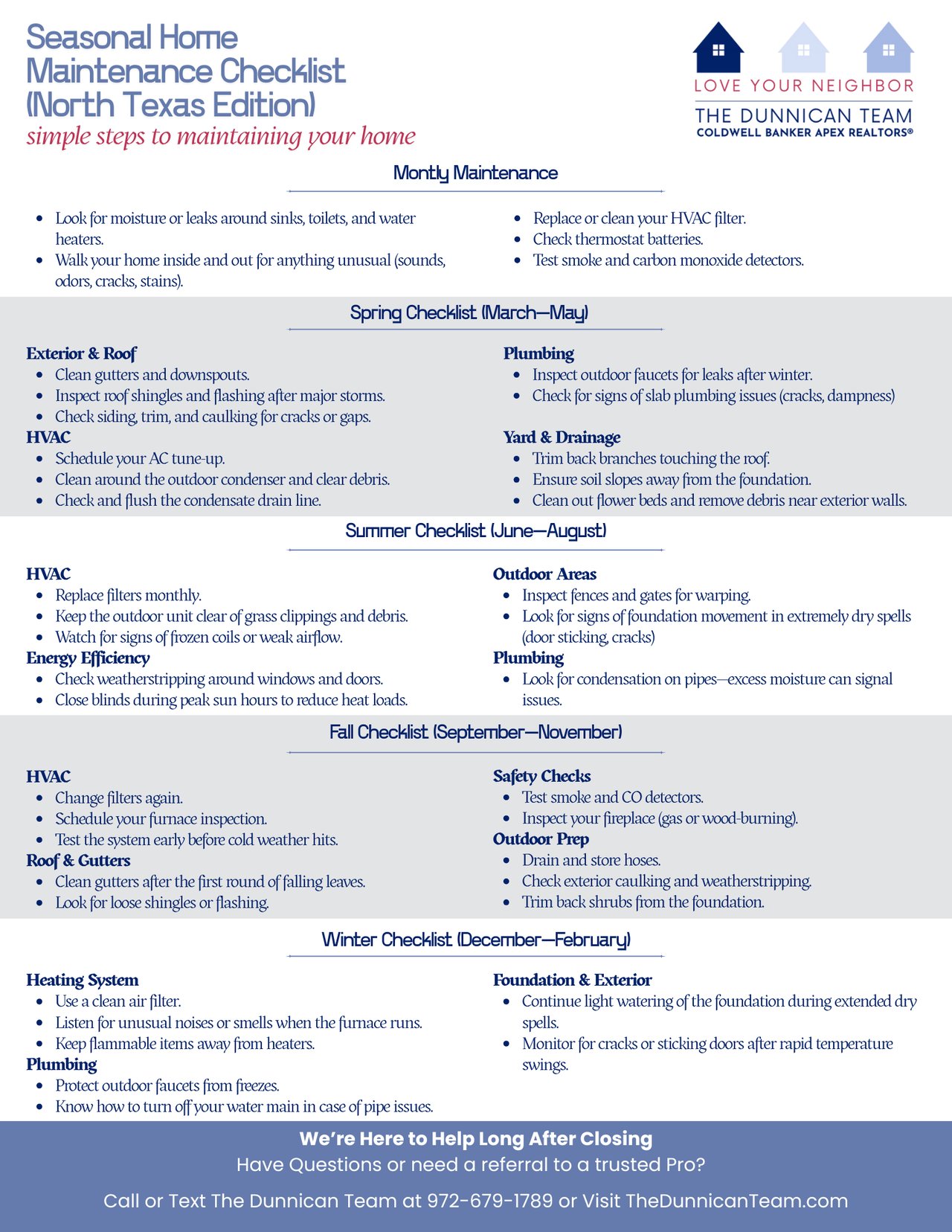
If you’d like recommendations for proven local professionals in North Texas, we’re always here to help—long after closing.

9106 Royal Burgess Dr Rowlett TX 75089
9106 Royal Burgess Dr Rowlett TX 75089