


Dallas, TX Housing Market Update – September 2026
Dallas, TX Housing Market Update | Reporting Period: Aug 1–Aug 31, 2026 (August 2026 data) • Data via NTREIS
Key Highlights | Dallas, TX Housing Market Update
- Median Price: $445,000 (+4.5% YoY)
- Closed Sales: 758 (-10.0% YoY)
- Active Listings: 4,185 (-8.7% YoY)
- Months of Inventory: 5.3 (-3.6% YoY)
What Sellers Need to Know
- Active listings fell 8.7% year over year, so competing inventory has thinned modestly.
- Median days on market improved 17.9% to 32 days, among the faster absorption rates in the region.
- Homes closed at 95.8% of original list price, so buyers continue to negotiate.
- Pending sales fell 20.6%, which suggests closing volume may remain soft into the fourth quarter.
What Buyers Need to Know
- At 5.3 months of supply, Dallas offers more room than the DFW Metroplex average of 4.4 months.
- The median price rose 4.5% year over year, the strongest gain among the larger markets in this report.
- With 4,185 active listings, selection remains broad across neighborhoods and price bands.
- Homes sold at 95.8% of original list price, indicating consistent negotiating room.
PRICES
Dallas's median sales price was $445,000 in August 2026, up 4.5% from August 2025. Homes sold at a median of 95.8% of original list price. For context, the DFW Metroplex median was $389,000 and the Texas median was $330,000.
SALES ACTIVITY
A total of 758 homes closed in August 2026, a decline of 10.0% from August 2025. Sellers brought 1,426 new listings to market, and 674 properties went under contract. Median days on market was 32, down 17.9% from a year ago. Pending sales fell 20.6% year over year, the steepest decline among the report's measures, which points to softer contract activity heading into the fall.
INVENTORY
Active listings totaled 4,185 at the end of August 2026, down 8.7% from August 2025. With 1,426 new listings against 758 closings, supply continued to build during the month.
MARKET BALANCE
Months of inventory stood at 5.3, compared with 5.5 in August 2025. That compares with 4.4 months for the DFW Metroplex and 5.4 months statewide. The inventory decline came from fewer homes being listed rather than from faster absorption, since closed sales also fell.
Dallas Housing Market Outlook: Fall 2026
Dallas held 5.3 months of inventory in August, slightly better supplied than the DFW Metroplex at 4.4 months, with active listings down 8.7% and closings down 10.0%. The 4.5% increase in median price stands out against declines in most surrounding submarkets and reflects the breadth of the city's housing stock across price tiers. Pending sales fell 20.6%, the sharpest decline among the measures tracked, which points to softer closing volume through the fourth quarter. New listings at 1,426 continued to outpace the 758 monthly closings, so supply should keep building. If mortgage rates ease, the large active inventory gives the market room to absorb additional demand without immediate price pressure. Neighborhood-level conditions vary widely within the city, and citywide figures should be treated as a starting point rather than a substitute for local analysis.
Trending in Real Estate News
- Realtor.com Research — The Best Time to Buy a Home Is the Week of Sept. 27 – Oct. 3 — Realtor.com's annual timing analysis names the week of September 27 through October 3 the most buyer-friendly week of 2026 nationally, with more active listings than earlier in the year and roughly $14,000 in savings on a median-priced home compared with the summer peak. The weeks immediately after are nearly as favorable.
- MetroTex Association of REALTORS® — Monthly DFW Housing Market Reports — The regional association's own monthly data for the Dallas-Fort Worth Metroplex and Texas.
- Zillow Research — Monthly Market Report — National sales and new-listing trends, useful for separating local movement from national conditions.
- Redfin — 2026 Housing Market Mood: Buyers Cautious, Sellers Showing Up — Survey-based look at how buyers and sellers are approaching the market this year.
Numbers describe a market. They do not describe your home, your street, or your timeline. If you are weighing a move in Dallas, Cindy and Cory Dunnican are glad to walk through what this data means for your specific situation — no pressure, no obligation. Get in touch with The Dunnican Team or call 972-679-1789.
Frequently Asked Questions
Is now a good time to sell a home in Dallas?
The Dallas market currently favors buyers. Months of inventory stood at 5.3 in August 2026, against 4.4 months for the DFW Metroplex and 5.4 months statewide. Active listings fell 8.7% year over year, and homes sold at a median of 95.8% of their original list price. Whether it is the right time depends on your price point and timeline, which is worth discussing against recent closings in your specific neighborhood.
Is now a good time to buy a home in Dallas?
Dallas had 4,185 active listings at the end of August 2026 and 758 homes closed during the month, which works out to 5.3 months of supply. The median sale price was $445,000, up 4.5% from a year earlier. Homes closed at 95.8% of original list price, so there was negotiating room on properties that had been listed a while.
How long are homes taking to sell in Dallas?
Median days on market in Dallas was 32 days in August 2026, down 17.9% from August 2025. That figure measures time from listing to an accepted contract and does not include the weeks between contract and closing.
Are home prices rising or falling in Dallas?
The median sale price in Dallas was $445,000 in August 2026, a change of +4.5% from August 2025. A median reflects the midpoint of what sold, so it moves when the mix of homes selling changes as well as when values change.
How competitive is the Dallas housing market?
With 5.3 months of inventory, the Dallas market favors buyers. Homes closed at a median of 95.8% of original list price and 674 properties went under contract during August 2026. Under 4 months of supply generally favors sellers, 4 to 5 months is balanced, and above 5 months favors buyers.
What is the median home price in Dallas, TX?
The median sale price in Dallas was $445,000 in August 2026. For comparison, the DFW Metroplex median was $389,000 and the Texas statewide median was $330,000.
How much housing inventory is available in Dallas?
Dallas had 4,185 active listings at the end of August 2026, down 8.7% from a year earlier. Against 758 closed sales, that represents 5.3 months of supply.
How does the Dallas housing market compare to DFW and Texas overall?
Dallas's median sale price of $445,000 compares with $389,000 across the DFW Metroplex and $330,000 statewide. Inventory stood at 5.3 months locally, versus 4.4 months for the Metroplex and 5.4 months for Texas.
Source: NTREIS MLS market trends (Aug 1–Aug 31, 2026) with August 2025 comparison metrics. Regional and statewide benchmarks from MetroTex Association of REALTORS® August 2026 Housing Reports.
DFW Real Estate Insights
Sign-up to receive monthly local market updates, homeowner guidance, buying and selling strategies, and useful information about North Texas communities from The Dunnican Team.
What's My Home Worth?
Get a real answer, not an algorithm's guess. Cindy and Cory personally research your home's value using current local sales and market data. The more information you provide, the more accurate your report will be.
The Newest Listings in Dallas, Texas
2
3
4
5
6
7
8
9
10
11
12
13
14
15
16
17
18
19
20
21
22
23
24
25

What Dallas Home Inspections Routinely Miss
The most costly pitfalls to avoid in Dallas home inspections include skipping specialist follow-ups, missing flood-zone checks near…

Aluminum Wiring Garland TX Homes
A Texas inspector is required to tell you a Garland home has aluminum branch wiring — and is…
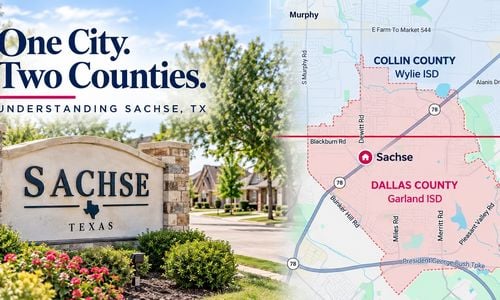
Is Sachse in Dallas County or Collin County?
Sachse is small enough to tour in an afternoon and never notice you crossed a county line. But…

How to Prepare Your DFW Home for Freezing …
From frozen pipes to power outages, here's how to winterize your DFW home before the next hard freeze…
First-Time Home Buyer Programs in Garland, TX: You …
Most people assume "first-time buyer" means you've never owned property. The federal regulation says something narrower and more…
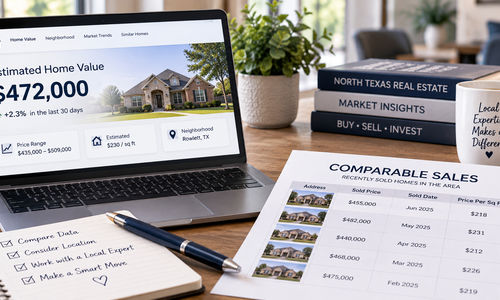
How Accurate Is Zillow's Zestimate in Texas?
Texas is a non-disclosure state — what homes sell for here isn't public record. Automated estimates are built…

Buying or Selling a Home With a Pool …
Most of what you'll read about Texas pool fence law is wrong, and the inspection that would catch…

Buyer Closing Costs in Texas: What You'll Actually …
Most buyers focus on the down payment and forget there's another number that needs to be ready on…

What Happens After You Accept an Offer in …
You accepted an offer — now what? In Texas, the next 30–45 days include an option period, title…

Texas Down Payment Assistance What Rockwall and DFW …
TSAHC and TDHCA can cover up to 5% of your loan amount toward a down payment and closing…

What Happens After Your Offer Is Accepted in …
What happens after an offer is accepted in Texas?Days 1–3: Earnest money and option fee delivered to the title…

Earnest Money in Texas: How Much, Who Holds …
In Texas, earnest money is deposited with the title company within 3 days of the contract's effective date…
Let's Get Social
 22
3
a house you tour once and immediately feels like home. 🪽
📍Dallas, Texas
this dreamy mid-century home is coming to our website next week!
🌐TheDunnicanTeam.com
follow us for more ⭐️
#DFWRealEstate #dallasrealestate
#dallashomes #dfwrealtor
#dallasrealtor
22
3
a house you tour once and immediately feels like home. 🪽
📍Dallas, Texas
this dreamy mid-century home is coming to our website next week!
🌐TheDunnicanTeam.com
follow us for more ⭐️
#DFWRealEstate #dallasrealestate
#dallashomes #dfwrealtor
#dallasrealtor
 1
1
Under Contract in Just 9 Days! 🎉
6101 Magnolia Lane is officially under contract after only nine days on the market.
A strong launch matters — from the presentation and pricing strategy to the photography, marketing, and follow-up that keep a listing in front of the right buyers. We’re thrilled to see that work come …
1
1
Under Contract in Just 9 Days! 🎉
6101 Magnolia Lane is officially under contract after only nine days on the market.
A strong launch matters — from the presentation and pricing strategy to the photography, marketing, and follow-up that keep a listing in front of the right buyers. We’re thrilled to see that work come …
 5
⭐️ JUST SOLD | Heath, TX
Thinking about selling or relaunching a listing? Let’s talk.
📱972-679-1789
🌐TheDunnicanTeam.com
#JustSold #HeathTX #LuxuryRealEstate #DFWRealEstate #TheDunnicanTeam
5
⭐️ JUST SOLD | Heath, TX
Thinking about selling or relaunching a listing? Let’s talk.
📱972-679-1789
🌐TheDunnicanTeam.com
#JustSold #HeathTX #LuxuryRealEstate #DFWRealEstate #TheDunnicanTeam
 2
What a special milestone to be part of. 🏡❤️
Natalie and Victor, thank you so much for your kind words and for trusting me to guide you through the purchase of your very first home! Buying new construction comes with a lot of decisions, timelines, and details, so making sure you always knew what was happening and what …
2
What a special milestone to be part of. 🏡❤️
Natalie and Victor, thank you so much for your kind words and for trusting me to guide you through the purchase of your very first home! Buying new construction comes with a lot of decisions, timelines, and details, so making sure you always knew what was happening and what …
 2
This is the kind of backyard you don’t find every day in Rowlett. 😍
Set behind the #4 green of Waterview Golf Course, this home delivers incredible views down the fairway PLUS a resort-style backyard with a pool, heated spa, rock waterfall, fire pit and huge covered patio. 🌴💦
And the inside is just as impressive—soar…
2
This is the kind of backyard you don’t find every day in Rowlett. 😍
Set behind the #4 green of Waterview Golf Course, this home delivers incredible views down the fairway PLUS a resort-style backyard with a pool, heated spa, rock waterfall, fire pit and huge covered patio. 🌴💦
And the inside is just as impressive—soar…
 5
Should you wait until spring to sell your home? Maybe. But don’t assume it’s automatically the better time.
Fall can mean fewer casual buyers, less competition from other sellers, and more motivated buyers who are working with a real timeline.
The trade-off? Pricing, presentation, and marketing matter even more when …
5
Should you wait until spring to sell your home? Maybe. But don’t assume it’s automatically the better time.
Fall can mean fewer casual buyers, less competition from other sellers, and more motivated buyers who are working with a real timeline.
The trade-off? Pricing, presentation, and marketing matter even more when …
 10
1
⭐️ JUST SOLD | 317 Knights Trail, Heath
A fresh strategy made the difference. ❤️
After spending 41 days on the market with another agent, 317 Knights Trail was relisted with The Dunnican Team on July 31 with new positioning, new marketing, and a renewed focus on what made this home stand out.
30 days later, it was u…
10
1
⭐️ JUST SOLD | 317 Knights Trail, Heath
A fresh strategy made the difference. ❤️
After spending 41 days on the market with another agent, 317 Knights Trail was relisted with The Dunnican Team on July 31 with new positioning, new marketing, and a renewed focus on what made this home stand out.
30 days later, it was u…
 1
Oh, and did I mention? 👀
The pool at 6101 Magnolia Lane was just resurfaced and finished with new water-level tile. Add in the covered patio and tall privacy fence, and this backyard is ready for sunny afternoons, evening swims, and easy outdoor entertaining.
If a Rowlett home with a pool is on your wish list, this o…
1
Oh, and did I mention? 👀
The pool at 6101 Magnolia Lane was just resurfaced and finished with new water-level tile. Add in the covered patio and tall privacy fence, and this backyard is ready for sunny afternoons, evening swims, and easy outdoor entertaining.
If a Rowlett home with a pool is on your wish list, this o…
 2
🏡 TODAY’S THE DAY! OPEN HOUSE IN WATERVIEW
We’re opening the doors at 10617 Gleneagles Lane in Rowlett today from 2–4 PM.
Come tour this single-story home on the 14th fairway of Waterview Golf Course and see the golf course views, spacious living areas, granite kitchen, gas fireplace, no-carpet interior, and backyard…
2
🏡 TODAY’S THE DAY! OPEN HOUSE IN WATERVIEW
We’re opening the doors at 10617 Gleneagles Lane in Rowlett today from 2–4 PM.
Come tour this single-story home on the 14th fairway of Waterview Golf Course and see the golf course views, spacious living areas, granite kitchen, gas fireplace, no-carpet interior, and backyard…
 1
🏡 OPEN HOUSE TOMORROW IN WATERVIEW!
Come see what golf course living looks like at 10617 Gleneagles Lane in Rowlett. This single-story home sits directly on the 14th fairway of Waterview Golf Course and offers spacious living areas, a granite kitchen, no carpet, a gas fireplace, and a backyard with wide-open fairway v…
1
🏡 OPEN HOUSE TOMORROW IN WATERVIEW!
Come see what golf course living looks like at 10617 Gleneagles Lane in Rowlett. This single-story home sits directly on the 14th fairway of Waterview Golf Course and offers spacious living areas, a granite kitchen, no carpet, a gas fireplace, and a backyard with wide-open fairway v…
 2
🏡 OPEN HOUSE THIS SATURDAY | 2–4 PM
Golf course views, a single-story layout, and all the amenities of Waterview — come see 10617 Gleneagles Lane for yourself this Saturday!
📍 10617 Gleneagles Lane, Rowlett, TX 75089
📅 Saturday, September 26
⏰ 2:00–4:00 PM
💲 Offered at $365,000
Set directly along the 14th fairway of…
2
🏡 OPEN HOUSE THIS SATURDAY | 2–4 PM
Golf course views, a single-story layout, and all the amenities of Waterview — come see 10617 Gleneagles Lane for yourself this Saturday!
📍 10617 Gleneagles Lane, Rowlett, TX 75089
📅 Saturday, September 26
⏰ 2:00–4:00 PM
💲 Offered at $365,000
Set directly along the 14th fairway of…
 2
Why Rowlett? ❤️
Because it offers something a little different from the typical DFW suburb. You’ve got Lake Ray Hubbard, established neighborhoods, newer communities, a wide range of home styles, access to both Garland ISD and Rockwall ISD depending on location, parks and trails, and a strong sense of community. And …
2
Why Rowlett? ❤️
Because it offers something a little different from the typical DFW suburb. You’ve got Lake Ray Hubbard, established neighborhoods, newer communities, a wide range of home styles, access to both Garland ISD and Rockwall ISD depending on location, parks and trails, and a strong sense of community. And …
