Contact
Office Locations
Home Office:
The Dunnican Team
9106 Royal Burgess Dr
Rowlett TX 75089
Rockwall Office:
Coldwell Banker Apex, Realtors®
2555 Ridge Road #144
Rockwall TX 75087
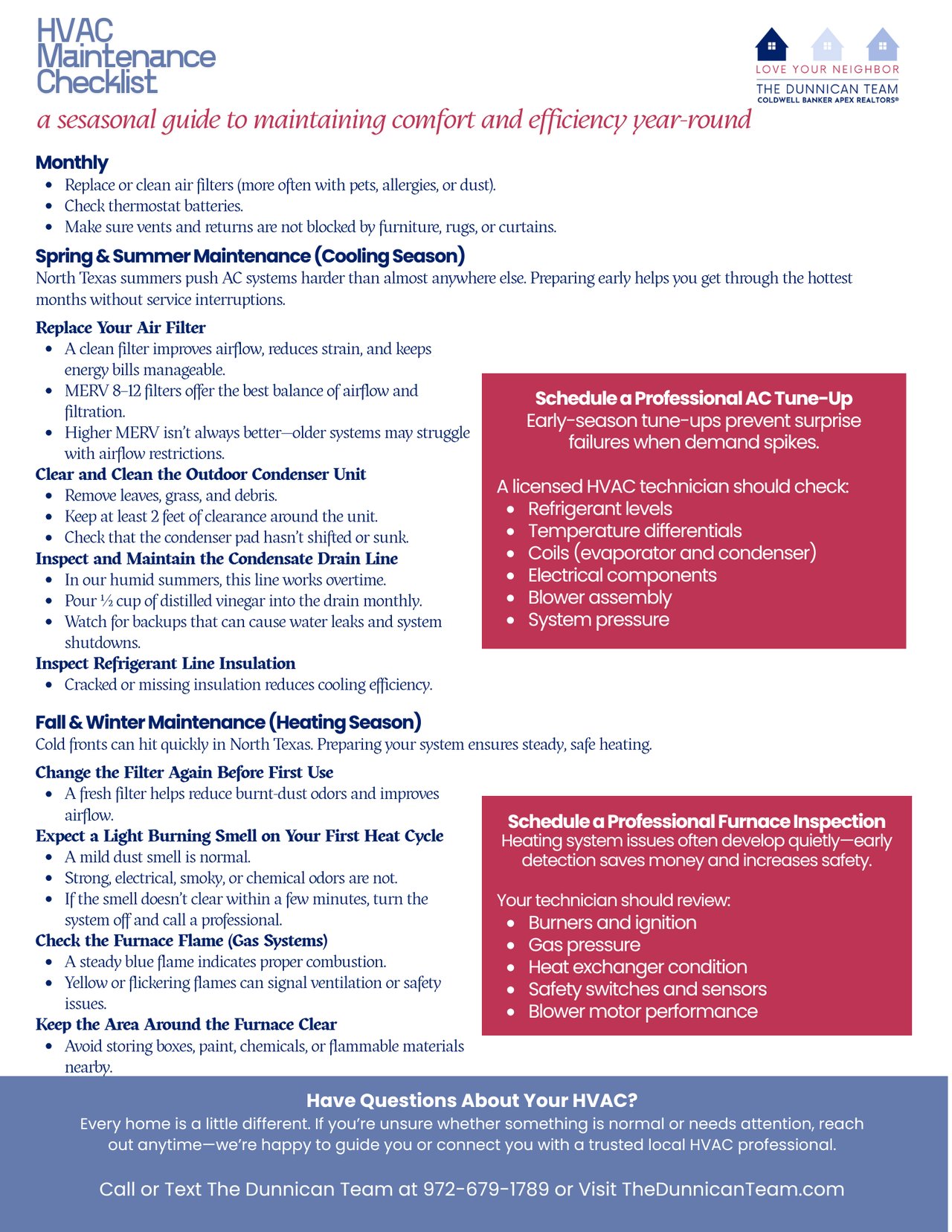
If you own a home anywhere in the Dallas–Fort Worth area, your HVAC system works overtime through long stretches of extreme heat and sudden winter cold fronts. Those temperature swings, combined with our high dust levels and humidity, can strain your system, reduce efficiency, and lead to unexpected repairs. The good news: a simple seasonal maintenance routine can keep your system running smoothly, improve indoor comfort, and help extend the life of your equipment.
This guide breaks down what DFW homeowners should do throughout the year to keep their heating and cooling systems performing at their best. Be sure to download our Seasonal HVAC Maintenance Checklist below.
Our climate swings from triple-digit summers to sudden cold fronts, making your HVAC system one of the hardest-working parts of your home. Regular seasonal maintenance helps you:
Reduce energy use and lower monthly bills.
Extend the lifespan of your HVAC equipment.
Prevent costly emergency repairs—especially during peak season.
Improve indoor air quality in a region known for dust and allergens.
Keep warranties valid when maintenance records are required.
Just like caring for your home’s structural systems, such as in our DFW Foundation Maintenance Guide, consistent HVAC upkeep protects your investment and your comfort.
Replace or clean air filters (more often with pets, allergies, or dust).
Check thermostat batteries.
Make sure vents and returns are not blocked by furniture, rugs, or curtains.
North Texas summers push AC systems harder than almost anywhere else. Preparing early helps you get through the hottest months without service interruptions.
A clean filter improves airflow, reduces strain, and keeps energy bills manageable.
MERV 8–12 filters offer the best balance of airflow and filtration.
Higher MERV isn’t always better—older systems may struggle with airflow restrictions.
Remove leaves, grass, and debris.
Keep at least 2 feet of clearance around the unit.
Check that the condenser pad hasn’t shifted or sunk.
In our humid summers, this line works overtime.
Pour ½ cup of distilled vinegar into the drain monthly.
Watch for backups that can cause water leaks and system shutdowns.
Cracked or missing insulation reduces cooling efficiency.
A licensed HVAC technician should check:
Refrigerant levels
Temperature differentials
Coils (evaporator and condenser)
Electrical components
Blower assembly
System pressure
Early-season tune-ups prevent surprise failures when demand spikes.
Cold fronts can hit quickly in North Texas. Preparing your system ensures steady, safe heating.
A fresh filter helps reduce burnt-dust odors and improves airflow.
A mild dust smell is normal.
Strong, electrical, smoky, or chemical odors are not.
If the smell doesn’t clear within a few minutes, turn the system off and call a professional.
A steady blue flame indicates proper combustion.
Yellow or flickering flames can signal ventilation or safety issues.
Avoid storing boxes, paint, chemicals, or flammable materials nearby.
Your technician should review:
Burners and ignition
Gas pressure
Heat exchanger condition
Safety switches and sensors
Blower motor performance
Heating system issues often develop quietly—early detection saves money and increases safety.
Construction growth and windy conditions send fine dust into your return system, clogging filters quickly.
Clogs from algae or debris can cause leaks or system shutoff.
Often caused by:
Low refrigerant
Dirty filters
Restricted airflow
Usually tied to airflow restrictions, duct leaks, or lack of maintenance.
If you're also reviewing other homeowner systems, our Slab Foundation Maintenance page pairs well with this guide for new North Texas homeowners.
Every 30–60 days, depending on filter type, dust levels, pets, and allergies.
Most homes do well with MERV 8–12. Extremely high MERV ratings can restrict airflow unless your HVAC system is designed for them.
Yes. Seasonal professional service helps avoid surprise failures during temperature extremes and maintains warranty compliance.
Dust buildup on the heat exchanger burns off during first use.
If the smell is intense or persistent, shut the system off and call a technician.
Use ½ cup vinegar monthly during cooling season and keep the line area free of debris.
Common reasons include a dirty filter, duct leaks, poor insulation, refrigerant issues, or reduced system efficiency.
Most units last 10–15 years in North Texas. Frequent repairs or reduced performance can indicate it’s time for evaluation.
If you’d like recommendations for proven local HVAC professionals in North Texas, we’re always here to help—long after closing.

9106 Royal Burgess Dr Rowlett TX 75089
9106 Royal Burgess Dr Rowlett TX 75089