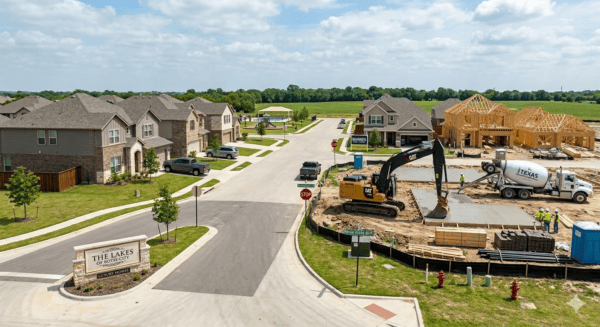
Royse City has grown faster than almost any community in the eastern DFW corridor over the last several years, and that growth has created a genuine choice that buyers didn't always have here: do you go with a new build in one of the master-planned communities spreading east of town, or do you buy in an established neighborhood and skip the wait?
Both paths make sense for different buyers. This guide is meant to give you an honest comparison so you can figure out which one fits your situation — not a generic checklist, but a real look at what the decision actually involves in Royse City right now.
What Makes Royse City's Market Unique
Royse City sits at the eastern edge of Rockwall County, with portions extending into Collin and Hunt counties. That geography matters because it affects school district zoning, tax rates, and commute times — all of which vary depending on exactly where the home sits.
The new construction activity here has been substantial. Several large master-planned communities have come online in the past few years, with more phases in the pipeline. That means buyers have real options — but it also means the resale market competes directly against builder inventory, which shapes pricing and negotiating dynamics in ways that don't apply in more established markets.
The commute is the other defining factor. Royse City is the furthest east on I-30 in this county, and the drive to Dallas, Plano, or other major employment centers is real. If you haven't made that drive at peak hours, do it before you commit to an address. For a detailed breakdown by destination, see our commute guide for Rockwall County.
New Construction in Royse City: What You're Actually Getting
The appeal of new construction is real and straightforward: everything is new, you have some control over finishes and features, and you're not inheriting someone else's deferred maintenance. In Royse City specifically, new builds have also come with competitive base pricing relative to comparable communities further west — which is part of why the area has attracted so much buyer interest.
But there are several things worth understanding before you sign a builder contract.
The sticker price isn't the real price. Builder base prices look attractive on paper, but the home in the model is almost never the home at the base price. Lot premiums for cul-de-sac locations, greenbelt views, or larger parcels can add significant cost. Structural options — extra bedroom, extended garage, covered patio — add more. Design center upgrades can add tens of thousands on top of that. Always ask for a net-pricing sheet that shows your actual out-of-pocket after incentives and before the upgrades you actually want.
Incentives are real but they shift monthly. Builders in active communities regularly offer rate buydowns, closing cost credits, or upgrade packages to move inventory. These can be genuinely valuable — but they change, and they're often tied to using the builder's preferred lender. Get competing financing quotes regardless, and understand what you're giving up if you use an outside lender.
Timelines are estimates, not guarantees. A to-build home in Royse City typically runs 6 to 10 months from contract to close, sometimes longer depending on permitting, materials, and the builder's pipeline. Royse City has experienced permitting and utility connection delays as infrastructure has tried to keep pace with growth — ask the builder for a written completion window and understand the contract language around delays before you sign.
Completed spec homes are a middle path worth knowing. If a builder has a finished or nearly finished home that hasn't sold, you can often get a quick close — sometimes 30 to 45 days — with more negotiating room than a to-build situation. These exist in most active communities and don't require the customization wait.
Get an independent inspection, even on new construction. Builder inspections and warranty processes aren't the same thing as having your own inspector walk the home. New construction has workmanship issues just like resale — they're just different ones. Document everything during the punch-list process and understand exactly how the warranty works before you close.
Understand the full tax picture. Many newer communities in Royse City carry Municipal Utility District (MUD) or Public Improvement District (PID) assessments on top of city, county, and school taxes. These can add $200–$400 per month to your effective carrying cost and don't always show up clearly in a base tax rate comparison. Always ask for the full tax breakdown — every taxing entity — for any specific lot before you make an offer. Our full North Texas property tax guide explains how MUDs and PIDs work in detail.
Resale Homes in Royse City: What You're Actually Getting
Royse City's resale market is smaller than its new construction market — there simply aren't as many established neighborhoods as there are new phases coming online. But what exists tends to offer a few things new construction doesn't.
Lower total tax burden in many cases. Older, established neighborhoods in Royse City often predate the MUD and PID structures common in newer developments. The base price might look similar to a new build, but the monthly carrying cost can be meaningfully lower once you account for the full tax picture. That difference affects both your budget today and your home's appeal to the next buyer when you sell.
More negotiating flexibility. In a resale transaction, condition, days on market, and comparable sales all influence the final number. You can negotiate repairs, credits, and concessions in ways that are much harder to do with a production builder. If a home has been on the market and needs updates, that can become an opportunity rather than a problem — if you're prepared to handle it.
Established character. Mature trees, larger lots, more varied architecture — these aren't things you can add to a new subdivision. Some buyers care about this a lot; others don't. If outdoor space, privacy, or architectural distinction matter to you, the resale market is worth a serious look even in a city with as much new construction as Royse City.
You inherit the history. With resale comes the obligation to understand what you're buying. A professional inspection is non-negotiable. Review seller disclosures carefully, check the age and condition of the roof, HVAC, water heater, and foundation, and budget for year-one maintenance realistically — not optimistically. If the home is in an outlying area, confirm whether it's on city sewer or septic, and check for drainage easements or floodplain designations.
How to Actually Compare Them Side by Side
The mistake buyers make most often is comparing a new build's base price to a resale price without accounting for what makes them actually equivalent. Here's the right way to think about it:
Take the new build's base price and add the lot premium, the structural options you actually want, a realistic design center budget (ask the sales rep what the average buyer spends), and the full annual tax burden including MUD and PID. Then compare that to the resale's price plus your estimated year-one maintenance and any updates you'd make. Now you have a real comparison.
Monthly payment is often the clearest lens. Run the numbers with your lender using the full tax picture for each property — not just the purchase price. The difference between a new build in a high-MUD community and a resale in an established neighborhood can be $400–$600 per month even at similar purchase prices. That adds up to real money over a five-year ownership horizon.
Who Tends to Choose Which Path
After working with a lot of buyers in this market, a few patterns show up consistently.
New construction tends to fit buyers who want customization and can wait, value a warranty and lower near-term maintenance, are drawn to master-planned community amenities, or are relocating from a market where new builds are the norm and the process feels familiar.
Resale tends to fit buyers who need to move quickly, want more negotiating flexibility, are sensitive to total monthly cost and the full tax picture, prefer established lot character, or are buying in a price range where new construction options are limited.
Neither path is universally better. The right answer depends on your timeline, your budget structure, and what you actually care about in a home.
A Few Things Worth Doing Before You Decide
Tour a completed spec home in any new community you're considering — not just the model. Model homes are fully upgraded and professionally staged; a spec home shows you what the base and mid-tier builds actually look like. Ask the sales rep for warranty claim examples and average response times. Request a lot map showing which lots are sold, reserved, and active — that tells you a lot about where a community is in its development cycle.
On the resale side, bring a checklist to every showing: roof age, HVAC condition, foundation indicators, evidence of water intrusion, and any obvious deferred maintenance. Budget for a full inspection and don't skip specialized inspections when the age or condition of the home warrants them.
In both cases, understand the school district zoning for the specific address before you get emotionally invested. Royse City ISD serves most of the city, but district boundaries can shift and campus assignments can vary by address and grade level. Verify directly with the district.
The Bottom Line
Royse City gives you a genuine choice that not every market offers — active new construction at competitive prices alongside an established resale market with its own advantages. Making the right call comes down to being honest about your timeline, your total monthly budget, and what you actually value in a home.
If you're actively comparing options in Royse City, we're happy to walk through the specific homes or communities you're considering and give you a straight read on the tradeoffs. Reach out to The Dunnican Team any time.
Frequently Asked Questions
What's the real cost difference between new construction and resale in Royse City?
The purchase prices can look similar, but the total picture often isn't. New builds in active communities frequently carry MUD and PID tax assessments that add $200–$400 per month to your carrying cost. Always get the full tax breakdown for any specific address before you compare.
How long does it take to close on a new build in Royse City?
A to-build home typically runs 6 to 10 months from contract to close. Completed spec homes can close in 30 to 45 days, similar to resale. Ask for a written completion window and review the delay language in the contract before you sign.
Do I need a real estate agent to buy new construction?
Yes — and it doesn't cost you anything extra. The builder pays the buyer's agent commission. Having your own representation means someone is looking out for your interests during contract negotiation, the inspection process, and the final walk-through. The builder's sales rep works for the builder.
Is a home inspection necessary on a new build?
Absolutely. New construction has workmanship issues just like resale — they're just different ones. An independent inspector can document items for the builder's punch list and warranty coverage before you close, which is far easier than trying to get them addressed after.
What school district serves Royse City?
Royse City ISD serves most of the city. Some areas near the county lines may feed into different districts. Always verify the specific campus assignment for any address you're considering directly with the district before making a school-based decision.