


What DFW Industrial Absorption Means for Eastern Metro
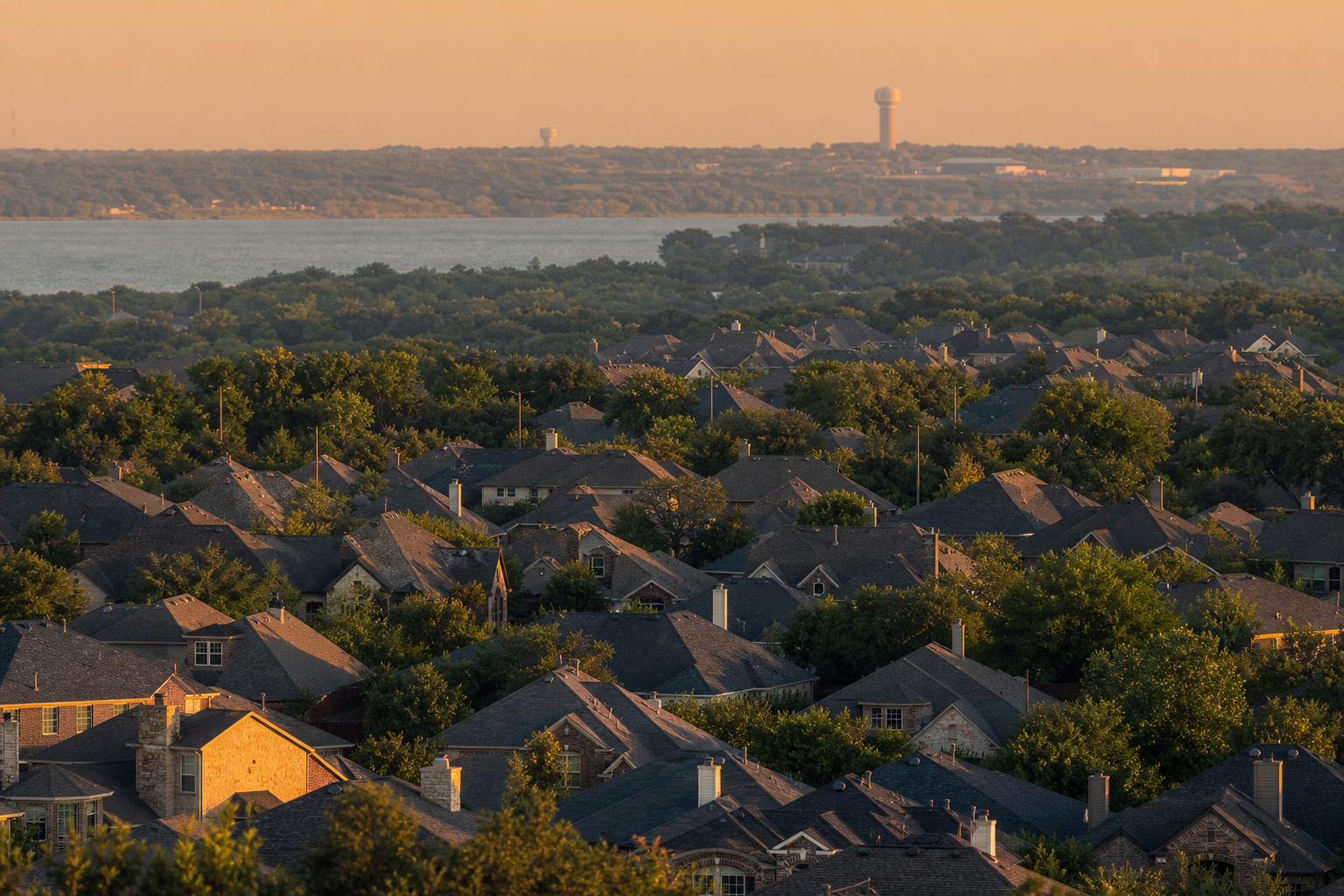
DFW industrial absorption means tenants are moving into more warehouse and logistics space than they leave. It signals regional economic activity, not a guaranteed rise in Eastern Metro home prices. For buyers and sellers, what matters is the specific street: access to jobs and highways versus truck traffic, noise, and zoning nearby.
What DFW Industrial Absorption Means for Eastern Metro
What does DFW industrial absorption mean for Eastern Metro homebuyers and sellers?
What DFW industrial absorption means is simple: tenants are moving into more warehouse and logistics space than they are vacating. That is a real signal about regional economic activity, but it does not automatically raise home prices around Lake Ray Hubbard or Lake Lavon. For buyers and sellers, the answer depends on the specific street, the nearby highways, and what is being built next door.
Key Takeaways
- CBRE reported DFW industrial vacancy fell to 7.8% in Q3 2026, down from 8.2% in Q2 2026 and 8.9% in Q3 2025.
- JLL reported about 17.9 million square feet of net absorption in the first half of 2026, against 13.2 million square feet of new deliveries.
- Industrial absorption measures occupied industrial space, not jobs created, households formed, or homes purchased, so it cannot predict a price increase on its own.
- The Lake Ray Hubbard and Lake Lavon corridors behave as separate residential zones because they connect to different highways and employment centers.
- For a specific home, the effect comes down to access to jobs and roads versus truck traffic, noise, and future land use on that parcel.
What DFW Industrial Absorption Means in Plain English
Net absorption is the change in occupied industrial space, generally move-ins minus move-outs. When it is positive, more space is being filled than emptied, and that usually pulls vacancy down.
That is what the 2026 numbers show. CBRE's Q3 2026 industrial figures for Dallas-Fort Worth put overall vacancy at 7.8%, improving from 8.2% the prior quarter and 8.9% a year earlier. JLL's DFW industrial report found roughly 17.9 million square feet of net absorption in the first half of 2026 versus 13.2 million square feet delivered. In other words, tenant demand outpaced new construction.
Here is how I'd read those figures, and just as importantly, what they leave out.
| Data point | What it tells you | What it does not tell you |
|---|---|---|
| Vacancy at 7.8% in Q3 2026 (CBRE) | Industrial space is being leased faster than it is sitting empty | How many people work in that space or where they live |
| 17.9 million sq ft net absorption, first half of 2026 (JLL) | Move-ins exceeded new deliveries across the metro | Anything about home prices, inventory, or buyer demand |
| 13.2 million sq ft delivered, first half of 2026 (JLL) | New supply is still being added | Which cities or corridors will see the next projects |
All of these are metro-wide figures. A DFW-wide number is not a statistic for the Lake Ray Hubbard or Lake Lavon housing market, and I'd be wary of anyone who presents it that way. Industrial square footage also does not convert to homebuyers at any fixed rate. Many facilities are highly automated, and many workers already live elsewhere in the metro.
If you want the actual residential numbers for our area, my North Texas housing market update for Q2 2026 is the better place to start.
How Does Industrial Growth Affect Buyers Near Lake Ray Hubbard and Lake Lavon?
For buyers, industrial growth is a trade between access and externalities. It can bring jobs, retail, and services closer, and it can also bring truck traffic, congestion, and noise. Which side wins is parcel-specific.
What DFW industrial absorption means for your search changes a lot depending on which side of the region you are shopping. In my experience, buyers lump "the lake communities" together, and that costs them. There isn't one Eastern Metro market. It is several, and a few miles can change the picture.
The Lake Ray Hubbard side
Rockwall, Rowlett, Garland, and parts of Heath each connect to Dallas employment in different ways, through Interstate 30, State Highway 66, and the President George Bush Turnpike. A home's relationship to those roads shapes its daily drive more than its distance to any single warehouse does.
The Lake Lavon side
Wylie, Sachse, Princeton, and Lavon lean on State Highway 78, State Highway 205, the President George Bush Turnpike, and employment centers in northern Collin County. Wylie, for example, is a complicated market on its own, and a buyer there needs to look at the specific address rather than the town label.
What about traffic, noise, and resale appeal?
Truck traffic, road congestion, noise, and future land-use changes can all affect how a home feels and how it resells. Industrial absorption alone cannot tell you which neighborhoods will gain or lose appeal. That takes a look at the actual parcel and its surroundings.
Here is what I'd check before falling in love with a house near a logistics corridor:
- The specific facility: Is it built, under construction, or only proposed?
- The zoning designation: Confirm the zoning of nearby land with the city or county, since it shapes what can be built next.
- Roadway plans: Find out whether planned road changes will route trucks toward or away from your street.
- The drive itself: Test your real commute and the truck routes at the times you would actually be on the road.
You can change the house, but you can't change where it sits. That is why I want you to settle the location question before you fall for the finishes. If you are weighing different parts of the corridor, my post on why Dallas' diverse markets need buyer representation explains how far apart two nearby areas can behave.
Does Industrial Growth Mean Eastern Metro Home Prices Will Rise?
No, not on its own. Industrial growth is a market narrative for sellers, not proof of a price premium, and nothing in the 2026 industrial data supports a specific percentage increase or guaranteed jump in buyer demand around the lakes.
I get why the idea is appealing. Strong industrial demand sounds like good news for nearby homeowners, and sometimes it can be. But I would rather tell you the truth upfront than let a headline set your price expectations and have the market correct you later.
How should sellers use the industrial story?
You can accurately point to nearby employment and logistics expansion only after you verify the details: the specific facility, the municipality, its zoning, construction status, and roadway plans. If a nearby project is real and your home has good access to it, that can be a legitimate selling point. If it is only a rumor, it is not.
Pricing still comes from comparable closed and pending sales, and in Texas sales prices are not public record, so local knowledge matters even more. An online estimate won't capture how a nearby warehouse, a new road, or a new subdivision affects your particular street. If you are also curious what a sale involves financially, I cover the categories in my post on the cost to sell a house in DFW's Eastern Metro, and you can see how the broader buyer-seller balance is shifting in how Dallas buyers can win in a softening 2026 market.
What local projects could decide whether growth helps or hurts?
Infrastructure usually decides it. Highway improvements, new interchanges, and where truck routes are directed can make a nearby industrial area a convenience for one subdivision and a nuisance for another. Zoning decisions on neighboring land matter just as much. This is the kind of question I walk my clients through before we make an offer or set a list price, because it takes local knowledge rather than a regional report.
Your own situation is the last variable. What DFW industrial absorption means for you depends on your timeline, your commute, and what you plan to do with the home, and the only way to know is to look at the actual property with someone who knows these corridors.
If you want to see how your home or your target neighborhood fits into the bigger picture, you can read what past clients say about working with me on Google, Zillow, and Realtor.com.
FAQ
Is industrial development near East Dallas likely to increase demand for homes around Lake Ray Hubbard?
It can support demand if the facilities create jobs and the nearby housing offers a workable commute, but it is not guaranteed. The 2026 industrial data shows strong regional leasing, not a measured effect on homebuyers around the lake. The impact depends on the facility, the roads, and the specific community.
Could new warehouses near the Lake Lavon corridor affect traffic, noise, or resale appeal?
They can, and the effect varies by location. Truck traffic, congestion, and noise are the most common concerns, and future land use matters too. Check the facility's status, the zoning of nearby land, and planned roadway changes before you buy or list a home close to a logistics area.
Does industrial absorption mean home prices will rise in the eastern DFW suburbs?
No. Absorption measures occupied industrial space, not household growth or home sales. It points to economic activity across the metro, but the research does not support a specific price or appreciation estimate for the lake corridors.
How far from a new distribution center should buyers look if they want an easier commute without truck traffic?
There is no single safe distance, because routes matter more than miles. A home a short distance from a facility but off the truck route can feel very different from one on the main approach road. I'd drive the area at different times of day and look at the roads the trucks will actually use.
Next Step
Industrial absorption is a useful regional signal, but your decision comes down to one address. If you are thinking about selling, I can look at how your home sits relative to nearby roads, jobs, and new development, and walk you through a pricing plan. Request your free home valuation. If you are buying anywhere between Lake Ray Hubbard and Lake Lavon, call The Dunnican Team at 972-679-1789 to set up a buyer consultation.
About Cindy Dunnican
Cindy Dunnican is the Founder and Managing Partner of The Dunnican Team at Coldwell Banker Apex, Realtors, serving Northeast Dallas, Rockwall County, and surrounding North Texas communities including Rockwall, Rowlett, Heath, Wylie, Sachse, Fate, Royse City, and Caddo Mills. With 28+ years of experience, 1,850+ transactions, and D Magazine D Best recognition every year since 2010, she leads listings, marketing, and brand strategy for the team; she and her husband Cory are both Global Luxury Certified and Real Trends Verified. Reach The Dunnican Team at 972-679-1789 or www.TheDunnicanTeam.com.
Coldwell Banker Apex, Realtors · 9726791789
Equal Housing Opportunity. Cindy Dunnican, Texas Real Estate Salesperson, regulated by the Texas Real Estate Commission (TREC). This article is general information, not legal, tax, or financial advice; confirm your own numbers with your title company, tax advisor, or lender.
Check out this article next

What to Know About Wylie's Neighborhoods Before Buying
Wylie isn't one uniform housing market. Neighborhoods differ by lake access, park and trail proximity, subdivision age, school attendance zones, and drive routes to work.…
Read Article