


Energy Upgrades in Garland, TX: What Actually Pays Back
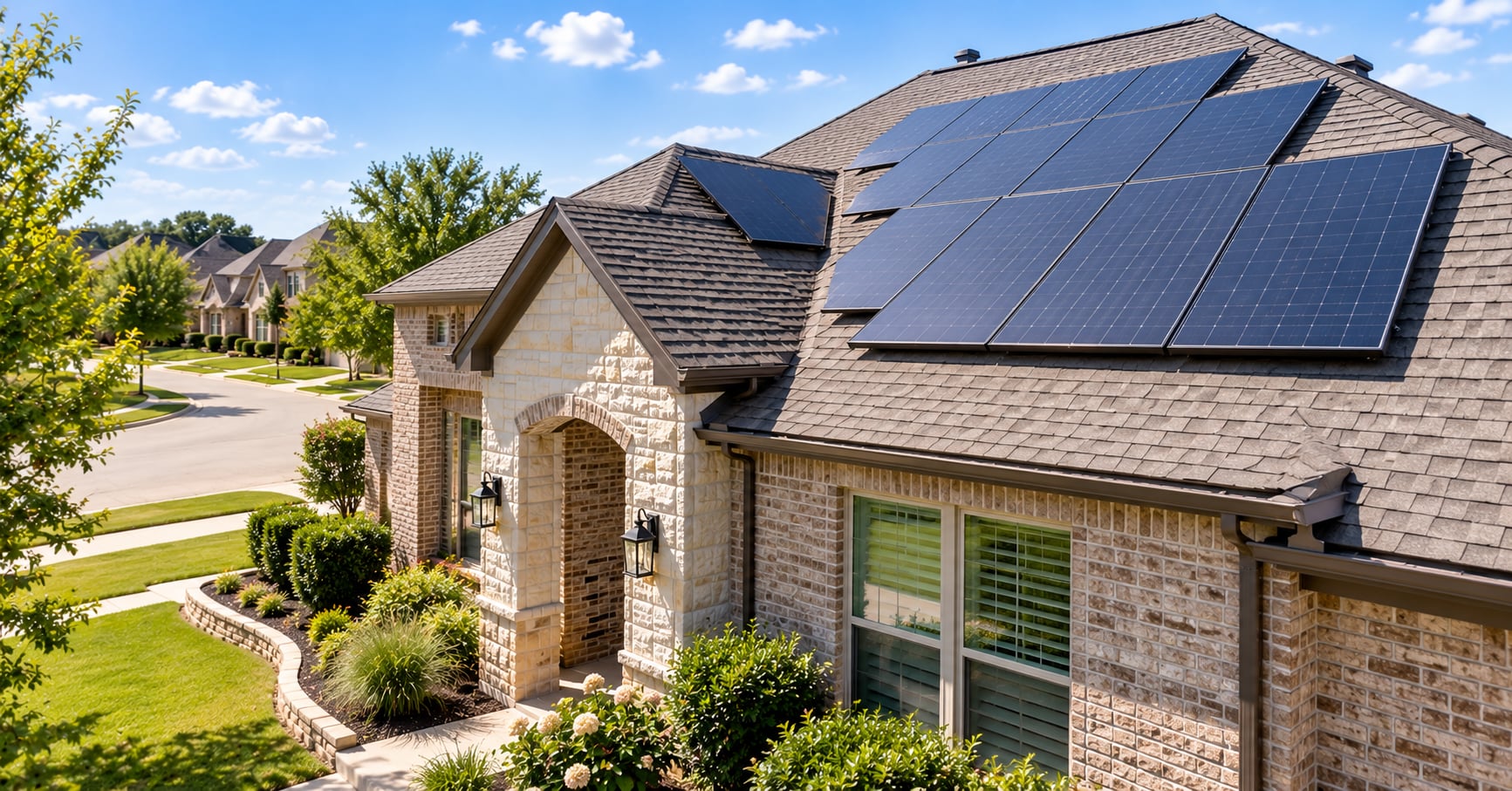
Which energy upgrades are worth it in Garland, TX?
Garland is different from most of DFW in a way that changes the answer: the city runs its own electric utility. Garland Power & Light is municipally owned, and it offers EnergySaver bill credits for specific upgrades that Oncor-area homeowners don't get. Separately, Texas Tax Code § 11.27 exempts the added appraised value of solar from your property taxes — but only if you file for it.
- GP&L credits cover HVAC, weatherization, and solar — first come, first served.
- Solar raises your home's value but not your tax bill — if you file Form 50-123.
- Form 50-123 goes to DCAD, and the filing deadline is generally April 30.
- Not every "green upgrade" shows up in an appraisal. Some are comfort, not value.
Most articles about eco-friendly home upgrades are interchangeable. LED bulbs, low-flow fixtures, a smart thermostat, maybe solar. All reasonable, none of it specific to where you live, and none of it answering the question a homeowner is actually asking: will this come back to me when I sell?
In Garland the answer genuinely differs from the rest of the metro, because of who sells you electricity and because of a Texas tax exemption most homeowners never claim.
Garland runs its own power company, and that changes the math
Most of the Dallas–Fort Worth area sits in Oncor's delivery territory, where residents shop among competing retail electric providers. Garland doesn't work that way. Garland Power & Light is a municipally owned utility serving the city, which means residents aren't picking a retail plan — and it means the rebate landscape is different from what a neighbor in Rowlett or Richardson is looking at.
GP&L runs an EnergySaver program that issues bill credits — not mail-in checks — to customers who complete qualifying upgrades.
Heating and cooling
Credits are available for installing central air conditioning or heat pumps in existing homes. Residential customers can also qualify for credits on high-efficiency window units carrying an ENERGY STAR rating.
This is where the money usually is. In North Texas, cooling is the dominant load, and an aging system is the single largest efficiency problem in most houses.
Weatherization — the unglamorous list
Qualifying measures include ceiling insulation upgrades, weather-stripping, caulking, ENERGY STAR windows and doors, window solar screens and film, duct insulation or replacement, and duct leakage testing.
Duct leakage is the one worth pausing on. Leaky ducts in a hot attic waste conditioned air before it reaches a room, and the testing is inexpensive relative to what it finds. It's the least exciting item on this list and frequently the highest-return one.
Solar
Residential customers may qualify for bill credits when installing solar photovoltaic panels. Because GP&L is a municipal utility, its interconnection rules and credit structure are its own — don't assume what applies in Oncor territory applies here.
Two things to know before you plan around any of this. Credits are issued first come, first served until program funding is depleted, and the program operates on a defined program year with a hard application cutoff. Confirm the current deadline and remaining funding directly with GP&L before you commit to a project — a rebate you assumed and didn't get is just an expense.
GP&L staffs an Energy Advisor for exactly these questions: 972-205-2929. Program details are published at gpltexas.org. One call before you sign a contract is worth more than any blog post, including this one.
Solar adds value to your home but not to your tax bill — if you file
Here's the part almost nobody tells homeowners, and it's genuinely valuable.
Under Texas Tax Code § 11.27, a property owner is entitled to an exemption from taxation of the amount of appraised value that arises from installing a solar or wind-powered energy device primarily for the production and distribution of energy for on-site use.
Read that plainly: if solar increases your home's appraised value, that increase is exempt from property tax. You get the value without the tax bill that would normally follow it.
Three practical points:
You have to apply — it isn't automatic
File Form 50-123 with your county appraisal district. Garland is in Dallas County, so that's DCAD. The standard filing deadline is generally April 30 of the tax year you're claiming. Nobody files it for you, and the appraisal district does not apply it on your behalf.
Net metering doesn't disqualify you
The statute requires that on-site use be the primary purpose, not the only one. Sending occasional surplus back to the grid doesn't defeat the exemption. This is a common misunderstanding that talks people out of filing.
It's the added value that's exempt, not your whole bill
The exemption covers the appraised-value increase attributable to the device. Your existing assessed value and everything else on the property are unaffected.
Confirm current filing requirements and deadlines with DCAD, since forms and dates change. But the principle is stable and worth knowing before you decide whether solar pencils out.
What an appraiser actually credits, and what they don't
This is where a REALTOR® can be more useful than an efficiency blog, because the honest answer disappoints people.
Not every green upgrade shows up in value. An appraiser assigns contributory value based on what the market demonstrably pays for — and for a lot of the standard eco checklist, the market pays nothing measurable.
Generally shows up: a newer, higher-efficiency HVAC system. Replacement windows, particularly on an older house with original single-pane. Solar, though contributory value varies considerably and owned systems appraise very differently from leased ones. A new roof, whether or not it's marketed as "cool roofing."
Generally doesn't show up as value: LED bulbs. Low-flow fixtures. A smart thermostat. Native landscaping. These are real improvements that reduce your bills and make the house nicer to live in — they just don't add a line to an appraisal. Buy them because they pay you monthly, not because you expect them back at closing.
The documentation is what converts work into value. Keep invoices, model numbers, warranty paperwork, and the GP&L credit confirmations. An appraiser can credit a documented, permitted, dated improvement. An undocumented one is just a claim, and undocumented work is the most common reason a genuine upgrade gets no credit at all. The same logic applies to any project you're weighing for resale value.
If you're on the other side of this — buying in Garland and trying to read what a seller has actually done — the Garland buyer programs guide covers the assistance side, and everyday energy savings covers what you can do without a contractor. For the same question in a newer-construction market, the Fate version of this deals with design-center decisions rather than retrofits.
If you're deciding between upgrades before selling in Garland, the useful question isn't which is greenest — it's which the market will actually pay you back for, and which ones just make the house nicer while you're in it. I'm glad to walk through a specific list. Agent professional fees are fully negotiable regarding how much and who pays.
What's my home worth?Talk through your upgrades
Or call The Dunnican Team at (972) 679-1789.
Frequently asked questions
Does Garland have its own electric utility?
Yes. Garland Power & Light is a municipally owned utility serving the City of Garland. Most of the surrounding DFW area is in Oncor's delivery territory with competitive retail electric providers, so Garland residents face a different rebate and interconnection landscape than neighbors in nearby cities. GP&L's Energy Advisor can be reached at 972-205-2929.
What rebates does Garland Power & Light offer homeowners?
GP&L's EnergySaver program issues bill credits for qualifying upgrades, including central air conditioning and heat pump installation in existing homes, ENERGY STAR window units, weatherization measures such as ceiling insulation, weather-stripping, caulking, ENERGY STAR windows and doors, solar screens and film, duct insulation or replacement, and duct leakage testing, plus solar photovoltaic installation. Credits are first come, first served until program funding is depleted, so confirm current availability and the application deadline with GP&L before starting a project.
Do solar panels increase property taxes in Texas?
No, provided you claim the exemption. Texas Tax Code § 11.27 exempts the amount of appraised value arising from installation of a solar or wind-powered energy device primarily for on-site use. You must apply using Form 50-123 with your county appraisal district — DCAD for Garland — and the standard deadline is generally April 30 of the tax year claimed. The exemption is not applied automatically.
Does net metering disqualify the Texas solar tax exemption?
No. Texas Tax Code § 11.27 requires that on-site use be the primary purpose of the device, not the exclusive one. Sending occasional surplus energy back to the grid does not defeat the exemption. This misunderstanding causes some homeowners not to file when they qualify.
Which energy upgrades actually add resale value?
Generally a newer high-efficiency HVAC system, replacement windows on an older home, a new roof, and owned solar, though contributory value varies and leased systems are treated very differently from owned ones. Items like LED bulbs, low-flow fixtures, smart thermostats, and native landscaping reduce operating costs and improve livability but typically do not add measurable appraised value. Documentation — invoices, model numbers, permits, warranties — is what allows an appraiser to credit work at all.
General information for Garland, Texas homeowners, not tax, legal, or engineering advice. Utility program terms, funding availability, application deadlines, and tax exemption requirements change. Confirm current EnergySaver program details directly with Garland Power & Light and current exemption filing requirements with the Dallas Central Appraisal District before making a purchase decision. Texas Tax Code § 11.27 is summarized as of September 2026. Appraised value is determined by a licensed appraiser based on market evidence; no upgrade is guaranteed to return its cost.
Check out this article next

Open House Questions in Rowlett, TX: Ask This First
The agent standing in the kitchen at an open house works for the seller. Texas law specifically exempts open houses from the written disclosure form,…
Read Article