


How does a backup offer work in Texas real estate?
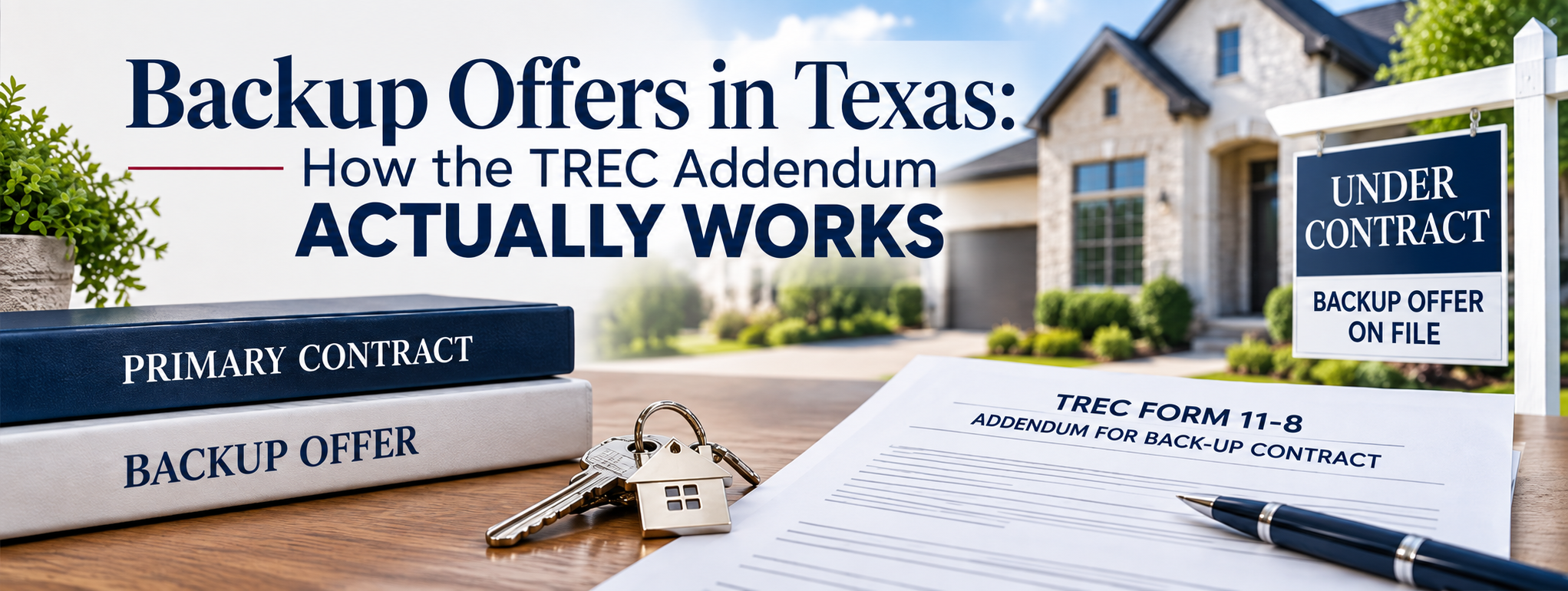
A Texas backup offer becomes a fully signed, legally binding contract the moment both parties execute it — it's attached to TREC Form 11-8, the Addendum for Back-Up Contract. That addendum states the backup contract is contingent on the seller's first (primary) contract terminating by a specific deadline date. If the first contract falls through before that date, the backup contract automatically steps into the primary position and the backup buyer's option period, financing timeline, and closing schedule all begin running from the date the seller notifies them in writing.The form: TREC No. 11-8
The mechanism is the Addendum for "Back-Up" Contract, TREC Form 11-8. It attaches to the second buyer's contract — the one you'd fall back on — and it does one specific job: it makes that contract contingent on your first, primary contract terminating. The addendum requires a deadline date, filled in at the time you sign. If your primary contract hasn't terminated by that date — meaning it either closed or is still active and moving toward closing — the backup contract automatically terminates too, and the backup buyer gets their earnest money back (though not the option fee, which compensated you for taking the backup slot off the table during that window). There's a companion form worth knowing about as well: TREC No. 62-0, the Seller's Notice to Buyer of Removal of Contingency, which is the formal written notice you send the backup buyer once the primary contract does terminate. That notice is what starts the backup buyer's clock running. Both forms are standardized by TREC, meaning your agent fills in blanks — buyer and seller names, property address, the deadline date, and which contract the addendum attaches to — rather than drafting custom language. That standardization is part of why backup contracts hold up cleanly: there's no ambiguity about what triggers the switch from backup to primary, because the form spells it out.What actually happens when the first contract falls through
This is the part sellers most want to understand, because it determines whether a backup offer actually saves you time.While the primary contract is active
The backup contract exists but is entirely dormant. The backup buyer has no performance obligations — no option period running, no earnest money deposit deadline pressing, no closing date approaching. Both parties are simply waiting to see what happens with the primary contract.If the primary contract terminates
You, as the seller, send written notice to the backup buyer using TREC No. 62-0 confirming the primary contract has terminated. From that notice date, the backup contract becomes the primary contract, and every performance period in it — option period, financing contingency, closing timeline — starts running as if it were a brand-new, freshly signed contract. The price and terms already negotiated carry forward exactly as written; nobody renegotiates.If the primary contract does not terminate by the deadline
If your first buyer closes, or the deadline in the addendum simply passes with the primary contract still active, the backup contract terminates on its own. The backup buyer's earnest money is returned; the option fee is not.Why this beats simply re-listing if a deal falls apart
Without a backup contract in place, a failed first contract means going back to square one: re-listing, re-marketing, fielding new showings, and negotiating a new deal, often while buyers wonder why the home is back on the market. That can cost real time, and depending on your market, it can also invite lowball offers from buyers who assume something is wrong with the property. A backup contract skips all of that. The moment your primary contract terminates, you're not starting from zero — you're moving directly into a second, already-negotiated deal at terms you already reviewed and accepted. It's one of the more underused tools available to Texas sellers, particularly in situations involving contingent offers, where the risk of the primary contract falling through is somewhat higher than average. It's worth noting a backup contract is fully binding once signed — it's not a soft "we'll keep you in mind" arrangement. The backup buyer is legally committed to those terms if the contingency clears, just as you're legally committed to notifying them promptly if it does. Because of that, it's worth having your agent review the deadline date carefully; too short a window and a legitimately viable primary contract might still be working through a normal closing timeline when the backup contract expires on its own.When it makes sense to use one
Backup offers tend to make the most sense in a few specific scenarios around Rockwall County, Rowlett, and the Northeast Dallas suburbs.- Multiple offer situations. If you received several strong offers and accepted one, the runner-up is often a natural backup candidate, and they may already know the terms are competitive.
- A primary contract showing early stress. If your first buyer is slow to schedule inspection, waffling on financing, or has already asked for one extension, lining up a backup gives you leverage and peace of mind.
- A contingent primary contract. If your buyer's purchase depends on selling their own home first, a backup contract protects you if that sale falls through.
A few practical things to keep in mind
Backup contracts are straightforward once you understand the mechanism, but a few details are worth getting right before you sign.- Set the deadline date deliberately. Too tight, and a legitimately viable primary contract could still be moving toward closing when the backup expires on its own, forcing you to negotiate a new backup from scratch. Too loose, and your backup buyer may lose patience and walk. Your agent should base this on where the primary contract actually stands — option period, financing approval, appraisal — not just pick a round number.
- Keep the backup buyer informed, within reason. You're not obligated to give a blow-by-blow of your primary contract's status, but a backup buyer who's kept completely in the dark is more likely to lose interest or find another home before your primary contract resolves one way or the other.
- Understand that notice matters. The formal written notice under TREC No. 62-0 is what legally triggers the switch. Don't rely on a phone call or a text message to a buyer's agent — get the notice executed properly so there's no dispute about when the backup buyer's performance periods began.
- Remember it's a real contract, not a placeholder. Both you and the backup buyer are bound to the agreed price and terms if the contingency clears. If your market shifts meaningfully while you're waiting on the primary contract, you don't get to renegotiate the backup contract's price — it carries forward exactly as signed.
Frequently Asked Questions
What TREC form is used for a backup offer in Texas?
TREC No. 11-8, the Addendum for Back-Up Contract, is attached to the second buyer's contract. It states that the contract is contingent on the termination of the seller's first, primary contract, and it sets a deadline date by which that first contract must terminate or the backup contract terminates too.Does a backup buyer's option period start right away?
No. Performance periods in the backup contract, including the option period, financing contingency, and closing timeline, are on hold until the seller notifies the backup buyer in writing that the first contract has terminated. Once that notice goes out, the backup buyer's clock starts running.Can a seller accept a backup offer while still under contract with the first buyer?
Yes. A seller can execute a fully binding backup contract with a second buyer at any point while the first contract is active. It doesn't interfere with the first contract — it simply sits in reserve, ready to move to primary position automatically if the first buyer terminates before the deadline in the addendum.What happens to the backup buyer's earnest money and option fee if the first contract doesn't terminate?
If the primary contract closes or otherwise doesn't terminate by the date specified in the addendum, the backup contract terminates and the backup buyer's earnest money is refunded. The option fee, however, is not refunded, since it compensated the seller for taking the property off backup consideration during that window.Why would a Texas seller want a backup offer instead of just re-listing if the first deal falls through?
A backup contract eliminates the gap between contracts. If the first buyer terminates, the seller doesn't have to re-market the home, field new showings, or negotiate from scratch — the backup buyer's terms, already agreed to, simply take over. That can save weeks and avoid the appearance of a listing that fell out of contract.Check out this article next