


VA and FHA Loan Property Requirements in Texas: What Sellers Need to Fix Before Closing
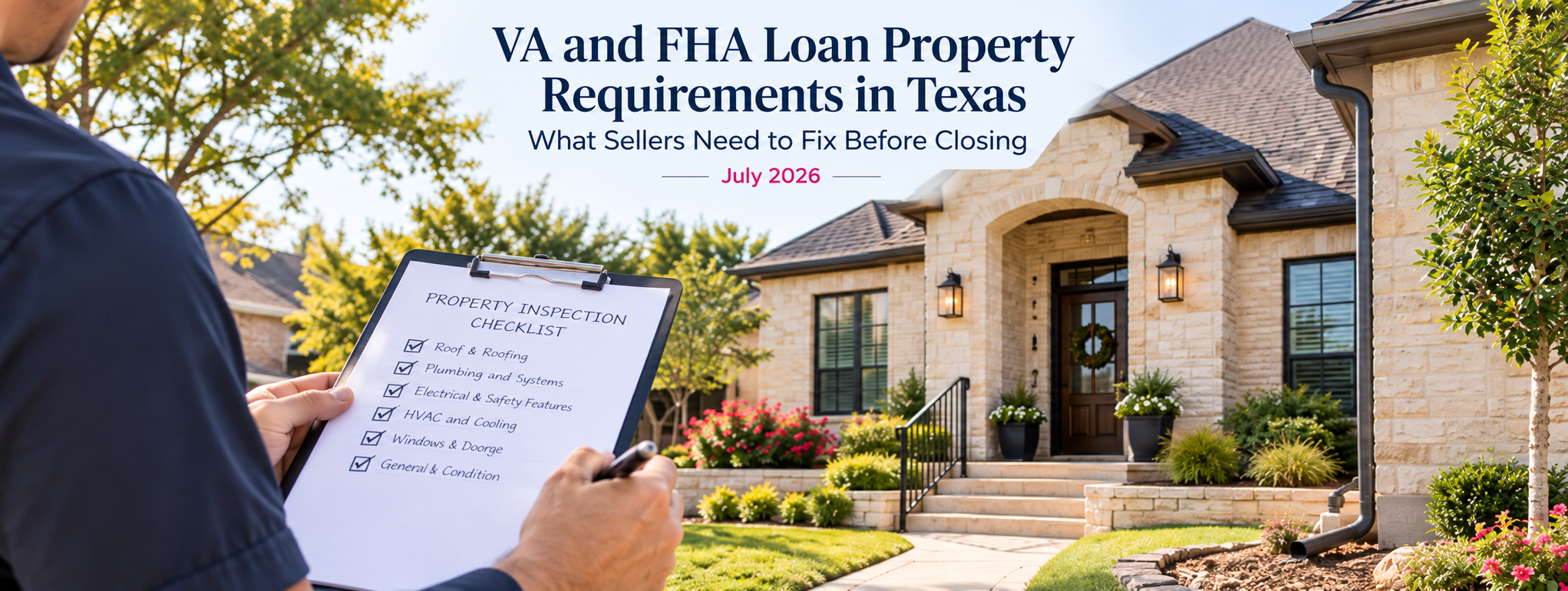
VA and FHA Loan Property Requirements in Texas: What Sellers Need to Fix Before Closing
What do FHA and VA loans require sellers to fix before closing?
FHA and VA loans both require the home to meet Minimum Property Requirements (MPRs) covering safety, structural soundness, and habitability — things like exposed wiring, active roof leaks, missing handrails, peeling paint on pre-1978 homes, or inadequate drainage away from the foundation. The lender's appraiser, not your home inspector, flags these items, and neither program legally requires the seller to pay for the fix — that's negotiated like any other repair. In practice, most Rockwall County and Northeast Dallas sellers agree to handle MPR items because the loan simply cannot fund until they're resolved.
By Cindy Dunnican | Originally published July 1, 2026 · Updated September 9, 2026
If you've accepted an offer from a VA or FHA buyer, you're going to hear the term "MPR" at some point during the transaction, and it's worth understanding before it shows up as a surprise on the appraisal report.
Minimum Property Requirements (MPRs) aren't the same thing as your home inspection. They're a separate, narrower checklist the lender's appraiser runs through to confirm the property is safe, structurally sound, and livable enough to secure a government-backed loan. I walk sellers through this distinction constantly, because the two processes — the option period inspection and the loan appraisal — run on parallel tracks in a Texas contract, and conflating them causes unnecessary panic.
What FHA and VA appraisers actually look for
Both programs pull from a similar set of concerns, though VA MPRs and FHA's HUD Handbook 4000.1 aren't worded identically. In broad terms, appraisers are checking three categories.
- Safety. Exposed electrical wiring, missing or broken handrails on stairs, broken windows, inoperable smoke detectors, and — on VA loans specifically — chipped or peeling paint on homes built before 1978, which gets flagged as a lead-paint hazard regardless of whether lead is confirmed.
- Structural soundness. Foundation cracks that suggest active movement, sagging rooflines, deteriorated framing, or evidence of significant prior damage that wasn't properly repaired.
- Habitability and moisture control. Working HVAC, functioning plumbing and electrical systems, proper attic and crawlspace ventilation, and grading that directs water away from the foundation rather than toward it.
This matters more in some pockets of Rockwall County and Rowlett than others simply because of housing stock age. A lot of homes built in the 1990s and early 2000s are hitting the age where foundation movement, aging HVAC systems, and roof wear start showing up on appraisals — not because the home is in bad shape, but because thirty years is when these things naturally surface, especially on North Texas clay soil.
It's also worth knowing what MPRs generally do not cover. Cosmetic wear, outdated finishes, worn carpet, and minor imperfections that don't affect safety or function typically aren't flagged. An appraiser isn't grading your paint color or your kitchen countertops — they're checking whether the home is safe to occupy and structurally intact. That distinction matters because sellers sometimes assume an FHA or VA buyer will trigger a much longer repair list than a conventional buyer would, and that's usually not the case.
Where VA and FHA differ slightly
The two programs pull from different handbooks, and a few distinctions show up in practice. VA appraisers are known for being fairly strict about peeling or chipped paint on any home built before 1978, treating it as a presumed lead hazard regardless of whether testing confirms lead is present. FHA appraisers tend to focus more heavily on functioning mechanical systems — a water heater that isn't properly vented, or an HVAC system that doesn't turn on during the appraisal walkthrough, can each generate a condition that has to be cleared before closing. Neither program requires cosmetic upgrades, and neither one is inherently more restrictive than the other across the board — it tends to come down to the individual appraiser and the specific condition of the property.
Who actually pays for the repair
Here's the part that trips people up: there is no VA or FHA rule that puts the repair bill on the seller. The requirement is that the item gets fixed and re-inspected before the loan funds — not who writes the check. Who pays is a negotiation, the same as any other repair request during a Texas transaction.
That said, in most cases I work through, the seller ends up covering MPR items, and here's the practical reason why: if the repair doesn't happen, the loan doesn't close, period. A buyer with a low down payment often doesn't have room in their budget to absorb an unexpected repair cost, and a seller who refuses to negotiate risks losing the buyer altogether and starting over. It's rarely worth the fight over a $400 handrail or a $200 broken window pane when it could cost a signed contract.
If you want a deeper look at how repair requests get structured and negotiated more broadly in a Texas transaction, our guide to negotiating repairs after a home inspection in Texas covers the mechanics that apply here too, even though MPR items and inspection items are technically different lists.
How this interacts with the option period
The lender's appraisal and the buyer's option period are two separate tracks that often overlap on the calendar, and it's worth keeping them straight.
Option period, days 1–10
The buyer's unrestricted right to terminate, typically seven to ten days in a Texas contract. The buyer orders a general home inspection during this window, and the option fee — paid to the title company, not to you — buys that right. This is where most repair negotiation begins, separate from anything the lender requires.
Lender appraisal, ordered independently
The lender orders the appraisal on its own timeline, which can land before, during, or after the option period ends. The appraiser is checking value and, for FHA/VA buyers, MPR compliance — not doing a full inspection. If MPR issues surface here, they become a lender condition the loan cannot close without resolving.
Repair completion and re-inspection
Whoever agrees to handle the repair completes it, and the appraiser (or a designated inspector) confirms the fix before the loan is cleared to fund. This has to happen before closing, which means it can compress your timeline if it surfaces late.
Because the option period and inspection process and the appraisal don't always align neatly, it's worth asking your agent to track both calendars from the day you accept an FHA or VA offer, not just the option period deadline.
What this means for your disclosure and your listing
None of this changes your obligations under the Texas Seller's Disclosure Notice, which is required under Property Code Section 5.008 regardless of how the buyer finances the purchase. If you already know about a foundation issue, an old roof, or a moisture problem, it needs to be disclosed whether the eventual buyer is using FHA, VA, conventional, or cash. Where MPR requirements do matter is in how you prepare a home for the market. If you know your buyer pool in Rockwall, Heath, or Wylie is likely to include VA and FHA borrowers — which is common in this area given the number of military-affiliated buyers connected to the broader DFW employment base — it can be worth addressing obvious safety items (loose railings, exposed wiring, chipped exterior paint) before you list, rather than negotiating them item by item later. A pre-listing inspection is one way to get ahead of this.
Agent professional fees are fully negotiable regarding how much and who pays, and that conversation is separate from anything discussed here — I'm happy to walk through both when we talk.
What to do if an MPR item shows up mid-contract
If you're already under contract and the appraisal comes back with a repair condition, don't panic and don't assume the deal is in trouble. Most MPR items are inexpensive and fast to resolve — a licensed contractor can often turn around a handrail, a GFCI outlet, or a broken window in a matter of days.
Here's how I typically advise sellers to handle it:
- Get a straight answer on cost and timeline first. Call a licensed contractor before you agree to anything, so you're negotiating with real numbers instead of guessing.
- Ask whether it's genuinely an MPR item or a lender overlay. Some loan officers or underwriters add their own conditions beyond what VA or FHA technically requires. Your agent can help push back on anything that isn't a true program requirement.
- Get the fix in writing. Whatever you agree to, document it as an amendment so there's no confusion about who's responsible and by when.
- Confirm re-inspection timing with the lender. The appraiser or a designated third party needs to sign off before the loan clears to close, so build that step into your closing timeline rather than assuming the repair alone is enough.
This is exactly the kind of situation where having someone who's navigated dozens of VA and FHA closings across Rockwall, Heath, Wylie, and the surrounding Northeast Dallas suburbs makes the difference between a stressful week and a routine one. I've seen nearly every version of this play out, and most of the time it resolves faster and cheaper than sellers initially fear.
If you've got an offer on the table from a VA or FHA buyer and you're not sure what to expect from the appraisal, I'd be glad to walk through your specific situation before it becomes a surprise. Every home and every buyer's loan program is a little different, and getting ahead of likely MPR items can save you a week of back-and-forth later.
Schedule a Seller ConsultationGet a Free Home ValuationFrequently Asked Questions
Who pays for FHA or VA required repairs in Texas, the buyer or the seller?
There's no federal rule requiring the seller to pay. FHA and VA only require that the flagged repair be completed and re-inspected before the loan can close. Who pays is negotiated between buyer and seller, the same as any other repair request, though in practice sellers often agree to cover MPR items to keep the loan on track.
Can a Texas seller refuse to make FHA or VA required repairs?
Yes. Nothing forces a seller to complete a repair. But if the item is a true Minimum Property Requirement flag, the loan cannot close until it's resolved, so refusing usually means the buyer has to pay for it, find another lender program, or the contract terminates.
Does a VA appraisal work the same way as a VA home inspection?
No. The VA appraisal checks value and Minimum Property Requirements only. A separate, optional home inspection during the option period covers far more detail, from HVAC condition to roof age to plumbing. Buyers using a VA loan should still get an independent inspection.
Do FHA and VA MPR issues have to be disclosed on the Texas Seller's Disclosure Notice?
The Texas Seller's Disclosure Notice under Property Code Section 5.008 asks about known defects regardless of loan type. If a seller already knows about a foundation issue, moisture problem, or safety hazard, it should be disclosed there independent of whether the buyer ends up using FHA, VA, or conventional financing.
Does an FHA or VA appraisal replace the option period in a Texas contract?
No. The option period and the lender's appraisal are two separate processes that often run at the same time. The option period, typically seven to ten days, gives the buyer the unrestricted right to terminate for any reason and covers a full inspection, while the appraisal is ordered by the lender to confirm value and MPR compliance.
Check out this article next

Texas Property Survey: What Buyers and Sellers Need to Know
A property survey tells you what you actually own — and who pays for one in Texas isn't automatic. Here's how the T-47 affidavit works…
Read Article