


How Accurate Is Zillow's Zestimate in Texas?
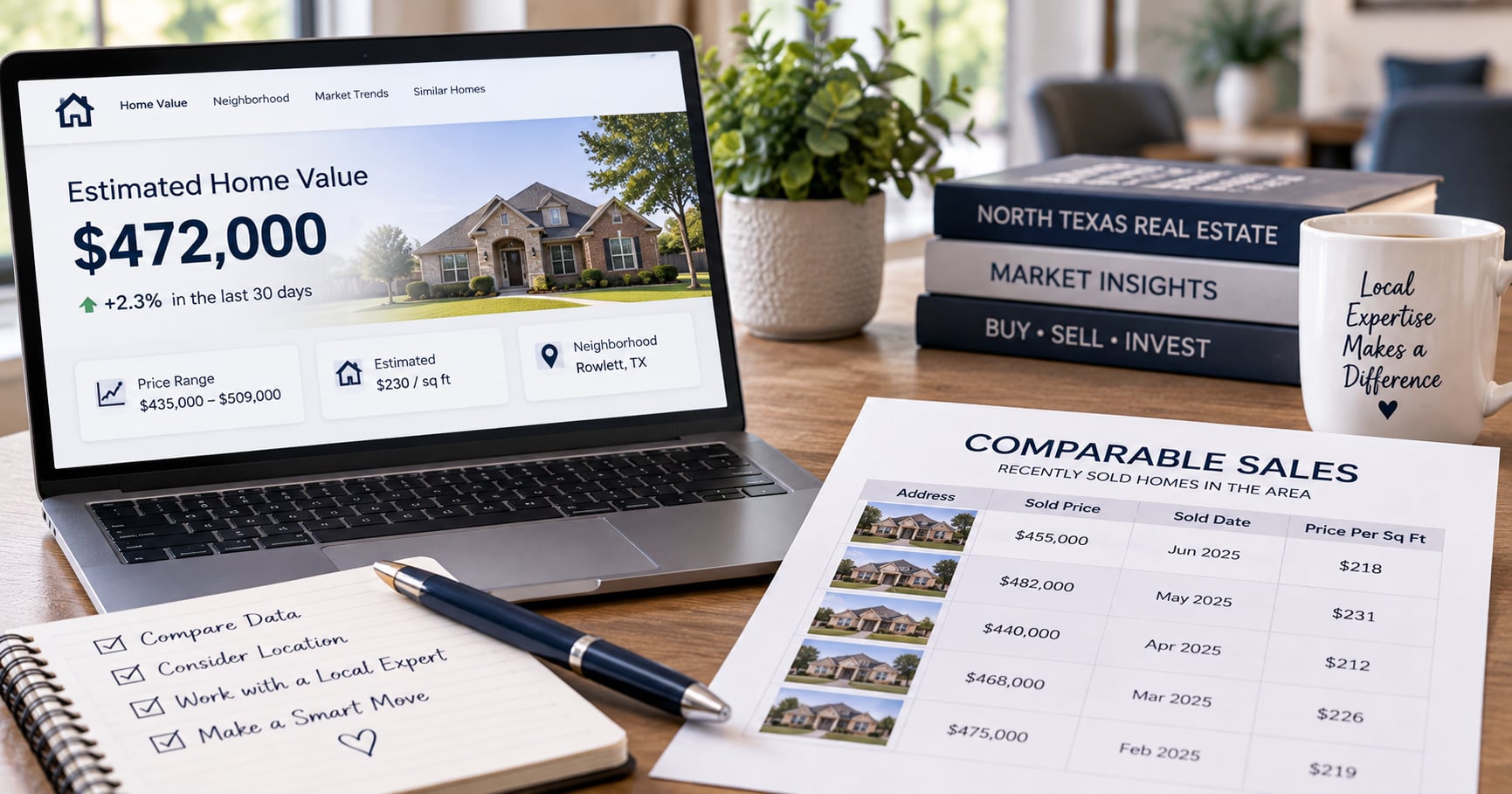
How accurate is a Zillow Zestimate in Texas?
Less accurate than in most of the country, for a structural reason: Texas is a non-disclosure state. Sale prices are not part of the public record here, and appraisal districts cannot compel anyone to reveal what a home actually sold for. Automated valuation models are built on sold prices — so in Texas they work around the missing input using list prices, tax assessments, and partial data feeds.
- Zillow's own published accuracy data puts the nationwide median error for off-market homes around 7%.
- Median means half of homes are off by more than that.
- On-market Zestimates look far more accurate partly because, once listed, the model can see the list price.
- On a $450,000 North Texas home, a 7% miss is about $31,500.
Almost every seller I meet has already looked. That's reasonable — the number is free, instant, and sitting on the internet with your address attached to it. The trouble starts when it becomes the anchor for a pricing decision, because in Texas that number is built on a foundation with a piece missing.
This isn't a complaint about Zillow. Their model is genuinely sophisticated, and Zillow publishes its own error rates, which is more transparency than most estimators offer. The problem is specific to where we live.
Why Texas breaks the model
An automated valuation model does essentially what an appraiser does, at scale: find comparable homes, see what they sold for, adjust for differences. Everything depends on that middle step.
In Texas, what homes sold for is not public information. Texas is one of a small number of non-disclosure states. When a home changes hands here, the deed is recorded — but the price isn't. Governmental entities, including county appraisal districts, cannot compel a buyer or seller to disclose the sale price.
So a national model pointed at a home in Rockwall, Rowlett, Garland, or anywhere else in DFW is working without the single most important input. What it has instead:
List prices
What sellers asked, which is not what buyers paid. In a market where roughly six in ten homes reduce before selling, asking prices systematically overstate value.
Tax assessments
Appraisal district values, which serve a different purpose entirely and are constrained by law. The homestead cap limits how fast an assessed value can rise regardless of what the market does, so assessments drift away from market value over time — usually downward relative to it, sometimes substantially.
Partial data feeds and public records
Square footage, bed and bath counts, lot size, permit history. All useful, none of it a price.
The people who do have sold prices are licensed agents. Sold data is reported to the MLS by the listing broker under MLS rules, which is how a local agent can see what actually closed on your street last month while a national model can only infer it. That gap is not about skill or effort — it's about access to a dataset that doesn't exist publicly in this state.
What the error rate actually means for your house
Zillow publishes its accuracy figures, and they're worth reading carefully because two numbers get quoted interchangeably when they describe very different things.
Off-market homes — homes not currently listed, which includes yours right now — carry a nationwide median error of roughly 7% in Zillow's published data. On-market homes come in far tighter, in the low single digits.
That gap looks like the model getting smarter when a home lists. It isn't, entirely. Once a home is listed, the model can see the list price, and the estimate moves toward it. An on-market Zestimate is partly a reflection of a number a human being chose. Which means the impressive figure is the one that describes homes where the answer was already visible, and the weaker figure is the one that describes your situation when you're deciding what to ask.
Then there's the word median, which does a great deal of quiet work. A median error of 7% means half of all homes are off by less than 7% — and half are off by more. It is not a margin of error or a worst case. It's the middle of the distribution, and the tail on the wrong side of it is long.
On a $450,000 home, 7% is about $31,500. For half of homes, the miss is larger than that. Set an asking price off by $31,500 in the wrong direction and you've either left real money behind or bought yourself the slow, expensive version of selling — homes in this market that had to cut their price sold for 90.7% of original ask and took 97 days, against 98.7% in 18 days for homes that never reduced.
Accuracy also degrades in exactly the places DFW is full of. Models do worst where sales are thin or homes are unlike their neighbors: acreage in Lucas, waterfront on Lake Ray Hubbard, custom homes in Heath, a 1978 house on a street that's been half rebuilt. Anywhere the comps are scarce or the subject is unusual, the number gets softer — which is the opposite of what most sellers assume.
What to use instead, and what each thing is actually for
Three different numbers get treated as interchangeable. They aren't, and knowing which question each one answers is most of the battle.
An automated estimate
Answers: roughly where does this home sit? Useful for a first look, for tracking direction over time, and for homes that are ordinary examples of common housing stock. Not built to price a specific house on a specific day.
A comparative market analysis
Answers: what would this home likely bring right now? Built from actual MLS sold data, adjusted by someone who has been inside comparable homes and knows which street backs the highway. This is the number to price from. Ask to see the comps and the adjustments — a CMA you can't interrogate isn't worth much.
An appraisal
Answers: what will a lender lend against? Performed by a licensed appraiser for the lender's benefit, not yours. It governs the financing, which is why a low appraisal can reshape a deal already under contract no matter what any estimate said beforehand.
One more worth separating out: your appraisal district value is not a market value and was never meant to be. It's the basis for your tax bill, subject to statutory caps, and it can sit well below what a home would sell for. If yours seems high relative to what your house would actually bring, that's a protest conversation, not a pricing one.
The practical move is simple: use the automated estimate as a starting point, then get the sold comps before you decide anything. The gap between the two is frequently large, and in a non-disclosure state it is large in ways no national model can see.
If you want to know what your home would actually bring — built from sold MLS data for your street, not a national model working without Texas sale prices — I'm glad to put that together. It takes about twenty minutes and you'll see the comps and the adjustments, not just a number. Agent professional fees are fully negotiable regarding how much and who pays.
Get a real home valuationTalk it through
Or call The Dunnican Team at (972) 679-1789.
Frequently asked questions
Why is Zillow less accurate in Texas?
Texas is a non-disclosure state, which means sale prices are not part of the public record and appraisal districts cannot compel anyone to disclose what a home sold for. Automated valuation models are built primarily on sold prices, so in Texas they substitute list prices, tax assessments, and partial data feeds. Licensed agents see actual sold prices because listing brokers report them to the MLS under MLS rules, which is a dataset that doesn't exist publicly in this state.
What is the Zestimate median error rate?
Zillow publishes its own accuracy figures. Nationally, the median error for off-market homes has been reported around 7%, while on-market homes come in far tighter in the low single digits. Median means half of homes are off by more than the stated figure — it is not a maximum. Zillow updates these figures, so check their published accuracy page for current numbers.
Why does the Zestimate change when I list my home?
Once a home is listed, the model can see the list price, and the estimate moves toward it. That's a significant part of why on-market accuracy looks so much stronger than off-market accuracy — the on-market figure describes homes where a human being had already chosen a number the model could observe. It's worth knowing before treating the on-market accuracy rate as evidence the estimate was right all along.
Should I price my home based on the Zestimate?
Use it as a starting point, not a decision. Price from a comparative market analysis built on actual MLS sold data for comparable homes near you, with visible adjustments you can question. In North Texas the cost of being wrong is measurable: homes that had to reduce their price sold for about 90.7% of original asking price after a median 97 days, while homes that never reduced sold for 98.7% in 18 days.
Is my county appraisal district value the same as market value?
No. The appraisal district value is the basis for your property tax bill and is subject to statutory limits, including the homestead cap that restricts how quickly an assessed value can increase. It serves a different purpose than market value and commonly diverges from it. If your assessed value looks high relative to what your home would actually sell for, that's grounds for a protest rather than a reason to raise your asking price.
General information for North Texas homeowners, not an appraisal or a valuation of any specific property. Accuracy figures referenced are published by Zillow and are updated periodically — check their current accuracy disclosures for the latest. Zillow and Zestimate are trademarks of Zillow, Inc.; The Dunnican Team is not affiliated with Zillow. Market figures cited are from an analysis of 2,999 closed NTREIS sales in Rockwall County and Rowlett for the twelve months ending September 11, 2026.
Check out this article next
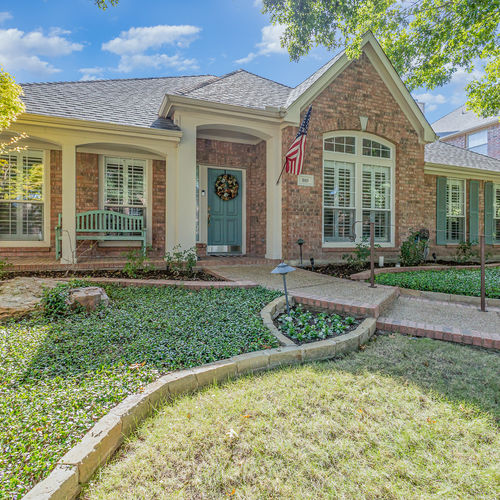
How to Price Your Home in Rockwall County and Rowlett
Two out of five homes that went on the market this year never sold. Most had already cut their price. A full year of Rockwall…
Read Article