


How Dallas Buyers Can Win in a Softening 2026 Market
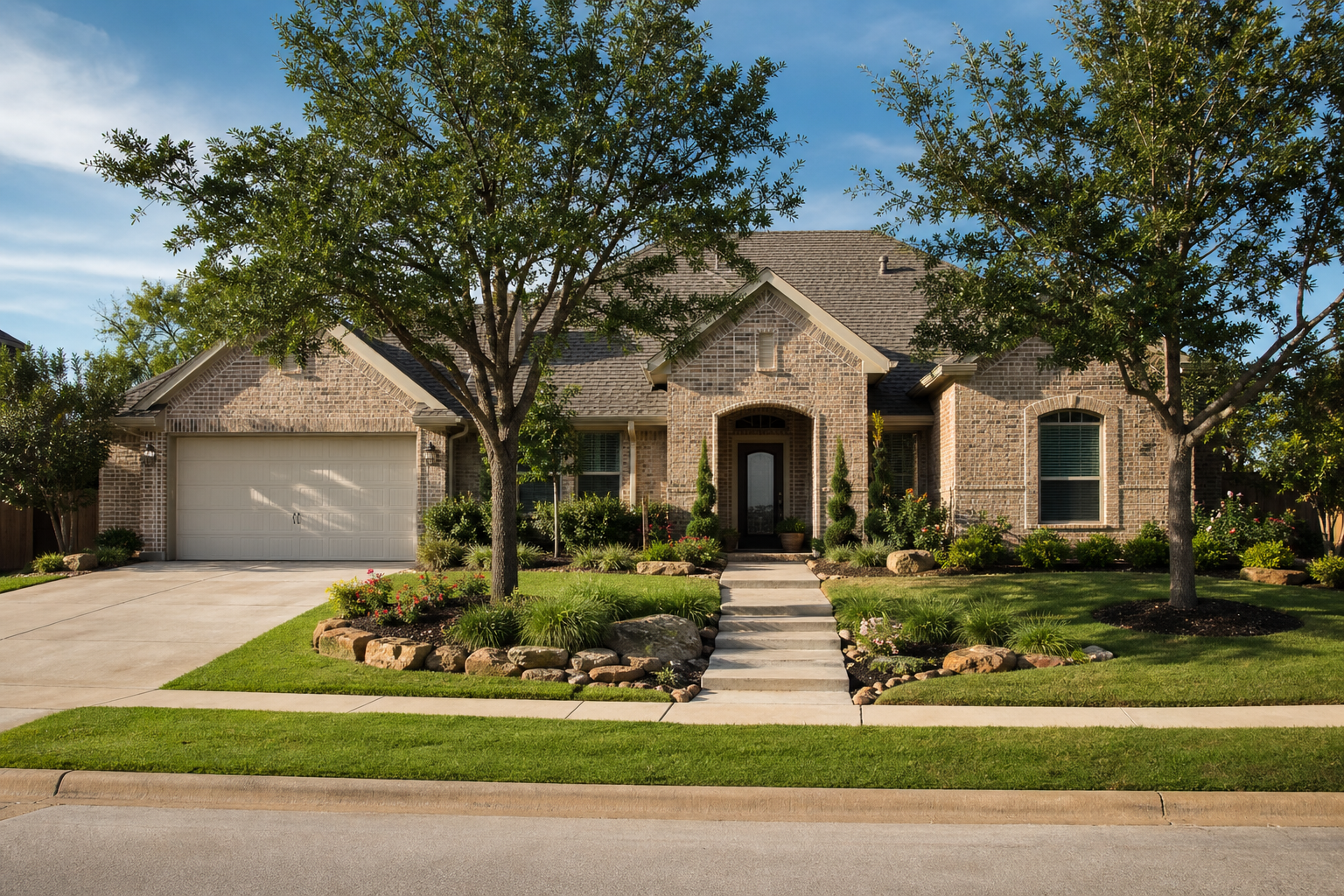
Dallas–Fort Worth's 2026 market gives buyers more inventory, longer days on market, and meaningful seller concessions, especially in Northeast Dallas and the Lake Ray Hubbard corridor. Buyers who read those signals correctly and pair them with strong financing can negotiate price, terms, and credits without overpaying.
Is Dallas a buyer-friendly market for home purchases in 2026?
Yes. Across the DFW metro, and especially in Northeast Dallas and the Lake Ray Hubbard and Lake Lavon corridors, 2026 conditions favor buyers in ways not seen since before 2020. More inventory, longer days on market, and sellers who are actively cutting prices and offering concessions mean buyers have real negotiating room on price, terms, and costs. The key is knowing which signals to read and how to act on them before conditions shift.
Key Takeaways
- Northeast Dallas recorded a median sale price of approximately $459,000 over the three months ending August 2026, down about 7% year-over-year, with homes averaging 49 days on market.
- DFW sellers cut prices by a median of roughly $12,500, about 3% of initial list price, in April 2026, according to the Texas Real Estate Research Center's June 2026 Texas Housing Insight report.
- The DFW metro had approximately 30,000 active listings in April 2026, up 40% year-over-year, and a close-to-list ratio near 93.8%, meaning buyers are routinely securing discounts off asking price.
- Rockwall County's median sale price held near $450,000 through August–September 2026, with Rockwall listing prices down about 3% year-over-year, stable values with room to negotiate, especially on dated or overpriced properties.
- Northeast Dallas was explicitly classified as a buyer's market in June 2026, meaning local supply exceeded demand and buyers could negotiate terms beyond price, contingencies, repairs, and closing timelines, without losing the deal.
What do buyer-friendly conditions actually look like in DFW right now?
There's a difference between a market that feels slower and one that actually gives buyers structural leverage. In 2026, Northeast Dallas and the eastern DFW corridor have both.
The National Association of REALTORS® defines a buyer's market as a period when more homes are available than buyers actively looking, a condition that gives buyers more time, less competition, and better negotiating position. By that definition, Northeast Dallas qualified as a buyer's market as recently as June 2026, according to a Realtor.com Northeast Dallas market summary.
Here's what the data looks like on the ground:
- Metro-wide inventory: DFW had roughly 30,000 active listings in April 2026, up 40% year-over-year, with average days on market around 77, up from 70 the prior year, and a close-to-list ratio near 93.8%, per an April 2026 NTREIS-based summary.
- Metro median price: The Q2 2026 North Texas housing market update (Texas REALTORS® via NTREIS) puts the DFW metro-wide median sale price at approximately $395,145, down 1.2% year-over-year, with price per square foot down 2.3% to about $190.79.
- Months of supply: At roughly 4.5 months metro-wide, DFW is no longer in the tight seller territory (typically under 3 months) that defined 2021 and 2022. The market has moved toward balanced or slightly buyer-leaning conditions, depending on submarket and price band.
- Seller price reductions: The Texas Real Estate Research Center's June 2026 Texas Housing Insight reports that DFW median seller price reductions in April 2026 were approximately $12,500, or roughly 3% of initial listing prices.
In Northeast Dallas specifically, the three months ending August 2026 showed a median sale price around $459,000, down about 7% year-over-year, with homes selling in roughly 49 days, up slightly from 47 days the prior year, and 587 homes sold versus 596 a year earlier, per Redfin's Northeast Dallas market data. Slightly softer demand and longer marketing times are exactly the conditions that allow buyers to negotiate more aggressively on both price and terms.
Over in Rockwall County, which covers a significant portion of the Lake Ray Hubbard corridor, the picture is more stable. Redfin's Rockwall County data through August–September 2026 shows a median sale price near $450,000, up a modest 0.9% year-over-year. At the same time, a September 2026 Rockwall market summary shows median listing prices around $535,000, down about 3.07% year-over-year and 1.12% month-over-month, meaning sellers are pricing more softly, especially on homes that have sat. That's negotiating room, even in a market where values are holding.
I pay attention to what buyers are actually choosing, not just what sellers are asking. Active listings tell us about the competition; closed and pending sales tell us where buyers are actually putting their money. Right now, both signals point to the same thing: buyers in this corridor have options, and sellers know it.
| Market / Area | Median Sale Price | YoY Change | Avg Days on Market | Period |
|---|---|---|---|---|
| DFW Metro (NTREIS) | ~$395,145 | -1.2% | ~77 days | Q2 / April 2026 |
| Northeast Dallas | ~$459,000 | -7.0% | ~49 days | 3 months ending Aug 2026 |
| Rockwall County | ~$450,000 | +0.9% | Not reported | 3 months ending Aug–Sep 2026 |
Sources: Texas REALTORS® via NTREIS (Q2 2026 update); Redfin Northeast Dallas; Redfin Rockwall County. Figures are the most recent available as of September 2026.
Which market signals tell you it's time to negotiate harder?
Not every listing in Northeast Dallas or along the Lake Ray Hubbard corridor is equally negotiable. The buyers who come out ahead are the ones who know what to look for before they make an offer.
Days on market as a leverage signal
In Northeast Dallas, with average selling times around 49 days, any listing that has already crossed that threshold is signaling something. Maybe it's overpriced. Maybe it has a condition issue. Maybe the seller's expectations haven't caught up to what buyers are actually willing to pay. Whatever the reason, a home sitting past the neighborhood average, especially one that has also had a recent price reduction, is a home where you can structure an offer assuming leverage.
Days on market alone don't scare me, because I want to understand why a home has been sitting. Sometimes that creates a real opportunity for a buyer. Other times the market is telling us something important about the property itself, and we should listen. That's a conversation worth having before you write the offer.
Price reductions as a timing signal
When a seller drops their price, they're telling you their original number didn't work. The Texas Real Estate Research Center data shows DFW sellers were cutting prices by a median of roughly 3% of list in April 2026. That reduction is often the starting point for a negotiation, not the end of it. Buyers who come in shortly after a reduction, with a clean offer and solid financing, are often in the best position to push for additional concessions on top of the reduced price.
Inventory levels by price band
The 4.5 months of supply at the metro level is an average. In specific price bands, particularly the $400,000–$550,000 range that covers much of Rockwall, Rowlett, and parts of Wylie, there may be even more competition among sellers. When you're looking at a price band with 60+ active listings in a given ZIP code and only a handful of pending sales, that ratio tells you the market is leaning your direction. A local agent with access to live NTREIS data can pull that breakdown for the exact neighborhoods you're targeting.
How should buyers structure offers in this market?
Buyer-friendly conditions don't mean you write a lowball offer and wait. They mean you have real tools to use, and using the right ones matters.
Rate buydowns, price cuts, and closing cost credits
With mortgage rates around 6.46% as of April 2026 (per the NTREIS-based April 2026 summary), one of the most valuable things a seller can offer isn't a lower price, it's a temporary or permanent rate buydown. A seller-paid buydown reduces your monthly payment in a way that a price reduction alone often can't match dollar-for-dollar. Closing cost credits work similarly. Understanding which concession type benefits your specific loan structure is something to work through with your lender before you make the offer, not after. For a deeper look at how these concessions work in Texas contracts, see my post on seller concessions in Texas.
Inspection contingencies and repair negotiations
In a market where buyers had to waive contingencies to win in 2021 and 2022, the shift back to standard terms is significant. Texas buyers have an option period built into the standard contract, a negotiated window to conduct inspections and decide whether to proceed, negotiate repairs, or walk away. In a buyer-friendly market, sellers are far less likely to push back on that window. For a full breakdown of how the option period works in Texas, I've covered that in detail separately. The short version: use it, don't waive it, and never skip an inspection because a home looks beautiful or because it's new construction. Pretty finishes don't tell you what's happening behind the walls.
Strong financing as a negotiation tool
In a buyer-friendly but not distressed market, a fully underwritten pre-approval, not just an automated pre-qual, gives you a meaningful edge. Sellers who have already sat on a listing for 50+ days are anxious about deals falling apart. A buyer who walks in with full underwriting completed signals lower risk, which can justify stronger asks on price and concessions. Multiple Dallas-specific guides, including the 2026 competitive offer guide from Grey Square, emphasize this as one of the most underused tools in a negotiation market.
New construction around the lakes
One thing I always make clear to buyers considering new construction near Lake Ray Hubbard or Lake Lavon: buyer-friendly conditions don't always show up as lower sticker prices on new builds. They show up as better incentives, rate buydowns, design center credits, lot premiums waived, or extended closing timelines. The builder's sales representative works for the builder. Having someone at the table looking out for your side of the transaction, especially when it comes to reviewing contracts and understanding what those incentives are actually worth, matters more in a "negotiation market" than it does when inventory is tight.
I also want to be honest about one thing: not every pocket of this market is equally buyer-friendly. Some areas, certain parts of Lakewood, select price bands in south Plano or Frisco, still see real competition. The eastern metro and lake corridor are generally less hyper-competitive, per the Grey Square competitive offer guide, which means you can often win without escalation clauses by combining a solid price with clean terms and clear financing. But I'll tell you which side of that line a specific listing falls on before we write anything.
Your specific leverage in any given deal depends on the property's condition, how long it's been on market, what the seller's situation is, and what comparable sales look like in the past 60–90 days. That's the kind of analysis I walk my clients through before we ever make an offer.
If you're weighing your options in Rockwall, Rowlett, Heath, Wylie, or anywhere along the Lake Ray Hubbard or Lake Lavon corridor, I'd be glad to pull the current numbers for the exact price band and neighborhood you're targeting. Schedule a consultation and let's look at what the market is actually telling us right now.
You can also read what past clients have said about working with The Dunnican Team on Google, Zillow, and Realtor.com.
Frequently Asked Questions
Is Dallas really a buyer's market right now, or does it just feel slower than 2022?
It's a real shift, not just a perception. Northeast Dallas was explicitly classified as a buyer's market in June 2026 by Realtor.com, meaning local supply exceeded demand. Metro-wide, DFW had roughly 30,000 active listings in April 2026, up 40% year-over-year, and a close-to-list ratio near 93.8%, meaning buyers are routinely securing discounts off asking price. That's a structural change from 2022, when buyers were waiving contingencies and bidding well above list just to compete.
How do I tell if a listing in Northeast Dallas or near Lake Ray Hubbard is overpriced in this 2026 market?
The clearest signals are days on market relative to the neighborhood average and recent price reductions. In Northeast Dallas, homes are averaging about 49 days on market through August 2026. Any listing that has been sitting longer than that, especially one that has already had a price cut, is likely priced above what buyers are willing to pay. Comparing the asking price against closed sales from the past 60–90 days (not 2022 comps) gives you the most accurate read on where value actually sits.
What market signals in East Dallas mean I can push harder on price and closing costs?
Three signals together create the strongest negotiating position: a home that has been on market past the neighborhood average, a recent price reduction on that same listing, and a seller who has already received little or no offer activity. When all three are present, buyers in the current East Dallas market can reasonably ask for both a price adjustment and seller-paid concessions, such as a rate buydown or closing cost credit, without it being seen as an unreasonable opening position.
In a buyer-friendly Dallas market, should I ask for a rate buydown, closing cost help, or just a lower price?
It depends on your loan structure, and this is a conversation to have with your lender before you write the offer. A seller-paid rate buydown can reduce your monthly payment in a way that a price reduction alone often can't match dollar-for-dollar at current interest rates. Closing cost credits can help preserve your cash reserves. A lower price reduces your loan balance and your long-term interest cost. The right answer is specific to your financing, and the good news is that in the current DFW market, many sellers are open to multiple forms of concession.
Are builders around Lake Ray Hubbard and Lake Lavon offering better incentives than resale sellers in 2026?
Often, yes, but the incentives look different. New-construction builders in lake-adjacent communities are more likely to offer rate buydowns, design center credits, or waived lot premiums than to cut the base price outright. Resale sellers in the same corridor are more likely to negotiate on price directly or offer closing cost credits. Neither is automatically the better deal; it depends on what you value most and how the total cost of ownership compares across both options. Having representation who can model both scenarios side-by-side is worth it before you commit.
How long does a home need to sit on the market in Dallas before I have serious leverage as a buyer?
In Northeast Dallas, where the current average is around 49 days, a listing that has been active for 60 days or more is already signaling that buyers haven't agreed with the price or terms. Metro-wide, with average days on market around 77, the threshold is higher, but any listing with a price reduction on top of extended time is a strong candidate for aggressive negotiation. The more important question is why it's sitting, because sometimes the market is telling you something about the property that matters beyond just the price.
About Cindy Dunnican
Cindy Dunnican is the Founder and Managing Partner of The Dunnican Team at Coldwell Banker Apex, Realtors, serving Northeast Dallas, Rockwall County, and surrounding North Texas communities — including Rowlett, Rockwall, Heath, Wylie, Sachse, Fate, Royse City, Sunnyvale, and Caddo Mills. With over 28 years of experience, 1,850+ transactions, and recognition as a D Magazine D Best honoree every year since 2010, Cindy leads listings, marketing, and brand strategy for the team. She and her husband Cory Dunnican are both Global Luxury Certified and Real Trends Verified. Reach The Dunnican Team at 972-679-1789 or thedunnicanteam.com.
Coldwell Banker Apex, Realtors · (972) 679-1789
Equal Housing Opportunity. Cindy Dunnican, Salesperson, licensed by the Texas Real Estate Commission (TREC). This article is general information only and does not constitute legal, tax, or financial advice. Confirm your specific numbers with your title company, tax advisor, or lender. Agent professional fees are fully negotiable regarding how much and who pays.
Check out this article next

Questions to Ask Rockwall Real Estate Agent
Roughly three-quarters of Rockwall's single-family homes were built after 1990. The rest — including a historic district where the city reviews exterior changes — do…
Read Article